


BAHRAINI women left in limbo for years after filing for divorce as a result of ‘never-ending court proceedings’ have appealed to have the law amended to help speed up the process.
Their stories have gone viral on social media in recent weeks as a campaign calling for fairness and action to end their plight has received overwhelming backing from supporters demanding change.
MP Dr Masooma Abdulraheem has submitted an urgent proposal to Parliament Speaker Fouzia Zainal to amend and tighten up Clause 95 of the 2017 Family Law that she claims remains open to ‘subjective interpretation’.
The issue surrounds Shi’ite women waiting for years for a settlement when their husbands refuse to divorce them unless certain financial conditions are met. Among its articles, the law clearly states that they have the right to initiate a divorce (Khula) on condition they pay back the dowry if a husband demands it.
Family matters for Shi’ite are handled by the Jaffari Courts while Sunnis go to the Sunni Courts.
The Sunni Courts order the original dowry to be returned. The case is not so clear-cut in cases handled by the Jaffari Courts, with claims of excessive amounts of money being demanded.
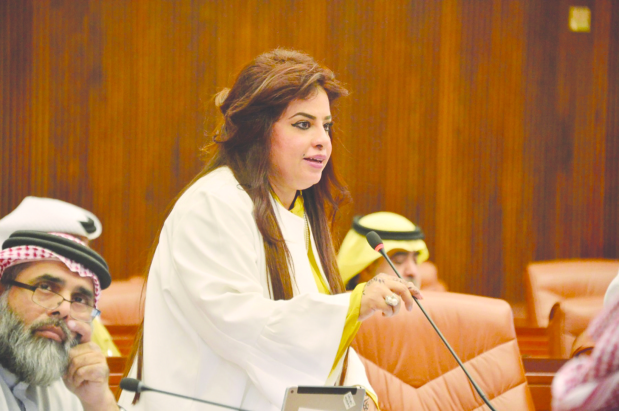
Dr Abdulraheem
“We are witnessing families torn apart, spending more time in court than at home and traumatised children torn between a devastated mother and a stubborn father,” said Dr Abdulraheem.
“These husbands are demanding outrageous amounts of money, sometimes to the tune of thousands of dinars, in order to allow the Khula – which isn’t what our religion and community have been built on. This has caused alarm and a call to tighten up clause (95) in the 2017 Family Law. It must be made.
“The interpretation by the Jaffari Courts has left the issue in the hands of the husband to demand money before agreeing to a divorce – that is unacceptable – as some ask for tenfold the dowry originally paid. They are asking women to buy their freedom and this is a barbaric turn of events.”
She added that she reviewed many cases in which men had refused to divorce their wives for years, claiming some women ended up enduring constant abuse until they found the money demanded. She also claimed that many families had been forced to take out private loans to help their daughters caught up in proceedings pay for a divorce.
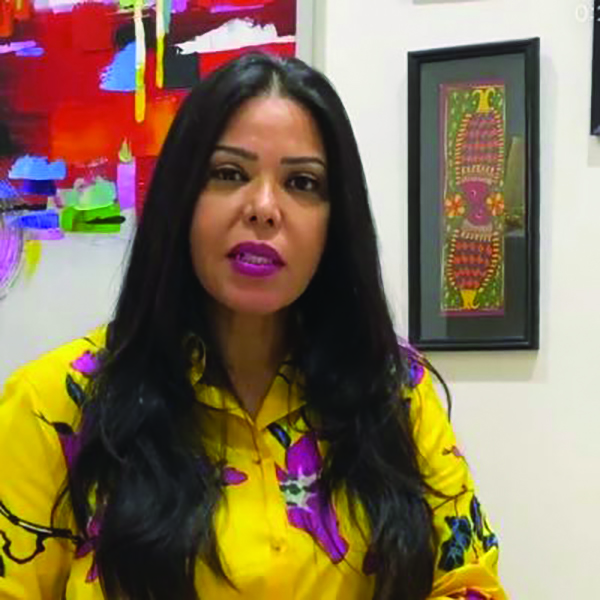
Ms Al Hawaj
“In order to stop this phenomenon marriage contracts must be stronger and contain more conditions and clarify duties and rights,” said prominent Bahraini lawyer Fatima Al Hawaj.
“The marriage document currently used is really old and we call on the Justice, Islamic Affairs and Endowments Ministry to make changes in the contract to strengthen it.
“Clause (95) is missing crucial elements as it stands because it leaves a lot of room for ‘subjective interpretation’ which is unacceptable.”
Bahrain Women’s Union official media speaker Zainab Al Durazi stated that the legislation should be changed to offer equal rights to all.
She told the GDN that the BWU has been demanding change since the 1980s. “The situation is unacceptable and because of the subjective nature of the clause the Sunni and Shi’ite interpretation remain different,” she added.
“I have seen a case in which a man gave his wife a Quran as a dowry and when she filed for divorce he demanded BD20,000 just to set her free.”
Dr Abdulraheem’s proposal was submitted to the Parliament Speaker and is expected to be discussed during the weekly session.
According to statistics provided by the Information and eGovernment Authority, there were 1,724 divorces in 2020, 2,023 in 2019, 1,929 in 2018 and 1,749 in 2016 while there were 6,026 marriages in 2020, 5,524 in 2019, 6,039 in 2018, 6,691 in 2017 and 7,019 in 2016.
The GDN previously highlighted that Family Law gives Bahraini women more rights in divorce and custody battles, sets out procedures for the handling of domestic issues in both Sunni and Jaffari courts, including divorce, child custody, marriages and inheritance disputes.
reem@gdn.com.bh
&uuid=(email))