

BAHRAIN will soon be part of a global clinical trial to study the effect of a revolutionary drug in controlling kidney damage in patients with sickle cell anaemia.
Around 20 sickle cell disease (SCD) patients in the country will receive Crizanlizumab (Adakveo) – the first drug to become available for the disease in 20 years – as part of the trial. The drug has been made by pharmaceutical giant Novartis and approved by the US Food and Drug Administration (FDA).
The study is being done by the Arabian Gulf University’s (AGU) Clinical Research Centre in partnership with Novartis and the Genetic Blood Diseases Centre at Salmaniya Medical Complex (SMC).
The GDN reported last month that Crizanlizumab will soon be offered free of cost to eligible SCD patients by the Health Ministry following royal directives.
Bahrain will be setting aside BD130 million annually to procure the drug, which is estimated to cost around BD1,200 per dose.
“The AGU’s Clinical Research Centre in partnership with Novartis and SMC Genetic Blood Diseases Centre has undertaken a collaborative initiative to plan and implement the second phase of clinical trials – to study the effectiveness of a new drug in controlling kidney damage in patients with sickle cell anaemia,” said an AGU statement.
A total of 148 sickle cell patients from 36 research sites around the world, including Bahrain, will take part in the trial.
They will be given 13 intravenous (IV) doses proportional to their biometrics, over a year. One dose will be given every 28 days, except for the second, which will be given 14 days after the first shot.
“We are expecting around 20 SCD patients from Bahrain to take part in this (second) trial which will see the impact of the drug in reducing kidney damage in them,” Bahrain Society for SCD Patient Care chairman Zakreya Al Kadhem told the GDN.
“This will be done at the Genetic Blood Diseases Centre, and the IV takes half an hour, and the patient will be under observation for another half an hour.
“The study will help analyse the need to increase the requirement of the drug. Based on the result, we will also be able to assess the impact, which in turn will help reduce the number of admissions/complications.
“The focus will be on kidney damage, but there are many other aspects that can be assessed – one being the prevalence of diabetes among SCD patients.”
People with SCD face the risk of developing chronic renal disease owing to reduced blood flow to the kidney. Chronic kidney disease can lead to end-stage renal disease, which is a common cause of death among such patients.
The AGU, in its statement, said it has signed a tripartite agreement, with its president Dr Khalid Al Ohali and Government Hospitals chief executive Dr Ahmed Al Ansari signing the deal with a Novartis representative.
In a joint statement, they noted that the drug, which contributes to reducing pain attacks in SCD patients, will be included in the treatment protocol after completing the necessary clinical trials and medical studies.
The second trial follows Novartis completing the first international clinical trial of the drug successfully in partnership with Sweden-based Karolinska Institute.
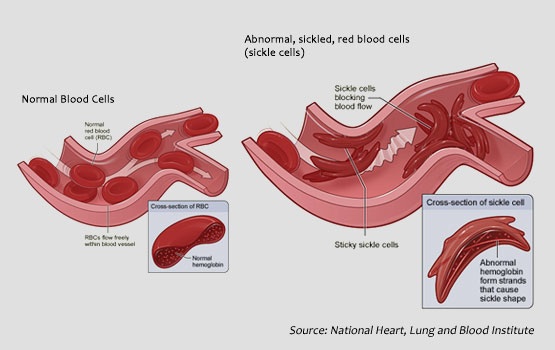
SCD, a genetic condition highly prevalent in Bahrain, occurs when a person’s body produces unusually shaped red blood cells that cause clumping and blockages in small blood vessels. Sufferers experience severe pain known as ‘crisis’ and may need hospital treatment several times a year.
There is no cure for the inherited condition with official statistics indicating that 8,664 Bahrainis – 4,271 male and 4,393 female – suffer from the disorder.
raji@gdn.com.bh
&uuid=(email))