

A proposal to slash the five-year validity of a driving licence for an expatriate and align it with the expiry of residence permits (RPs) was unanimously approved by MPs at their weekly session yesterday.
The move to amend the 2014 Traffic Law was presented by five MPs led by Jalal Kadhem.
They believe that the measure will tackle ongoing violations by expatriates illegally residing in Bahrain following the expiry of their work permits and engaging in unauthorised work such as driving unauthorised taxis.
The parliamentarians also said they firmly believed that the move will reduce traffic congestion in the country with fewer licences being issued.
Currently, Bahrainis and expatriates are granted five-year driving licences.
Parliament’s foreign affairs, defence and national security committee had backed the proposal, while the Interior Ministry had urged MPs to reject it.
“The issue is already governed by law which states that expatriates should have a valid residency permit when applying for training, testing, getting the actual licence or renewing an existing one,” said the ministry.
“The proposal is illogical and inapplicable and will lead to statistic disruptions in the electronic system and confusion among traffic police implementing the rules,” it added.
“Aligning licence validity with residency permit validity will not reduce traffic congestion as MPs believe, with many expatriates already having valid licences but opting to use company or public transport.
“We don’t need to fix a system that is not broken.”
Mohammed Al Rifae said the government was complicating things, when the legislation was simple.
“We just want expatriate driving licences to be linked with residency, which is two years, so why are things getting complicated?
“Nowadays, when illegal workers are caught by traffic police, they show a valid driving licence and are let go.
“This new legislation will clearly stop that.”
The National Institution for Human Rights told MPs earlier that the proposal did not violate any human rights since it doesn’t restrict or prevent the movement of expats.
“It is purely organisational and doesn’t breach the equality status, expatriates’ freedom or international human rights conventions or treaties,” it said.
l MPs also unanimously approved a new legislation that would force independent government authorities and government-owned companies to achieve 100 per cent Bahrainisation within two years of the law being issued.
The Civil Service Commission said that companies did not come under its jurisdiction.
However, it added that 6,979 expats, which is 16pc of the total government workforce, were under contract with ministries, authorities and government bodies until April last year.
Bahrain Mumtalakat Holding Company also told MPs in writing that the move doesn’t allow it flexibility to hire suitable candidates that match its needs.
The company, which is Bahrain’s sovereign wealth fund, said it has achieved 88.6pc Bahrainisation and affiliate companies have reached 83.4pc with 12,000 Bahrainis being employed.
l Parliament also unanimously approved proposed amendments to the 2001 Companies Law, which would see Mumtalakat and affiliate companies losing their ‘special classification’ bringing them in line with any other company in the country.
This would require Mumtalakat and affiliates to make legal, technical and financial changes within three years of the law being issued.
The ministries of Finance and National Economy and Industry and Commerce said the special status for some companies was aimed to protect dynamic sectors that have significance on other aspects directly and indirectly.
l Parliament unanimously approved a proposed legislation that would have all profits from fully or partially state-owned companies or any company it contributes funding into, listed in the national state budget.
l MPs unanimously approved amendments to the 2000 Names, Surnames and Nicknames Court Procedures Law that would prevent people from contesting any name change or addition after five years.
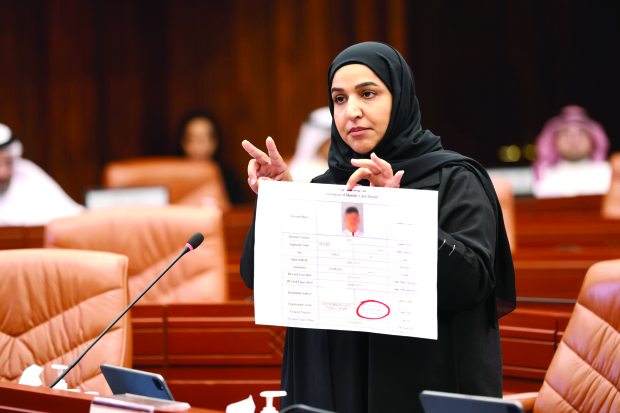
Jalila Al Sayed showcased the case of two citizens “Hussain” who share the same four names.
Another proposed amendment to the same law forbidding bizarre names or surnames that contradict the Islamic Sharia or degrade and insult people has been on hold for the past two years in the Shura Council.
First name should be followed by that of the father, grandfather and the family surname. Those who do not have a surname may use their great grandfather’s name.
Names should be documented in Arabic, with English as an option.
Names should not be preceded by titles or nicknames like ‘Wajeeh’ (which means ‘honourable’ in English) ‘Master’ or ‘Haji’.
Double first names should be avoided.
All will be drafted into proper legislation by the government and referred back to Parliament and the Shura Council for review within a maximum of six months.
&uuid=(email))