

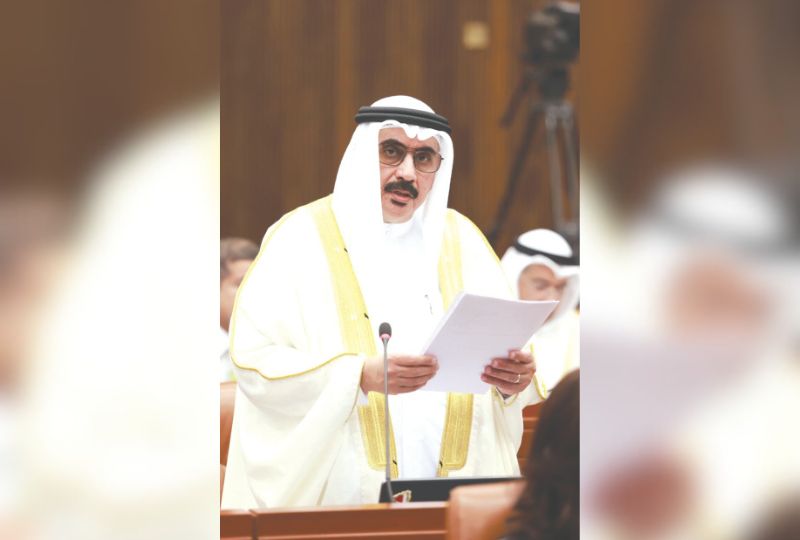
Three parallel attempts to increase marriage grants for widows and female beneficiaries across Bahrain’s civilian, social insurance and military pension laws are set to be rejected by the Shura Council on Sunday.
The council’s services committee concluded that the proposals conflict with the kingdom’s recent pension reforms and risk adding financial strain to already pressured funds.
The recommendation – ahead of Sunday’s debate and vote – was made in three separate reports by the committee chaired by Dr Jameela Al Salman, with Talal Al Mannai as vice-chairman.
The proposals seek to amend Article 90 of the Social Insurance Law (Decree-Law 24 of 1976), Article 41 of the Military Pension Law (Decree-Law 11 of 1976), and Article 87 of the Government Employees Pension Law (Law 13 of 1975).
All three amendments, originally proposed by MPs, sought to raise the marriage grant paid to widows or eligible female pension beneficiaries to reflect rising living costs, noting that the amount has remained unchanged for nearly 15 years.
However, after a series of meetings and consultations with the Social Insurance Organisation and the Military Pension Fund, the committee concluded that the proposals, though socially motivated, lack the financial and actuarial foundation required for pension legislation.
“These proposals must be viewed within the broader legislative direction that Bahrain has adopted in recent years to reform pension and insurance funds and restore their financial sustainability,” Dr Al Salman said.
She stressed that the kingdom’s pension reforms since 2020 were built on a comprehensive and interconnected legislative approach aimed at controlling expenditure, aligning benefits with long-term sustainability and ensuring funds can meet both current and future obligations.
“Introducing isolated benefit increases outside that comprehensive framework undermines the very philosophy upon which the recent reforms were based,” she said.
During committee deliberations, officials from the Social Insurance Organisation revealed that the proposed increase, despite affecting only 50 to 80 cases per year, would raise costs by 34 per cent in the public sector and 61pc in the private sector, without any identified sustainable funding source.
They noted that the current average annual cost of marriage grants already stands at around BD300,000 in each sector.
“The social impact of the amendment is limited when compared to the financial impact on the pension funds,” Dr Al Salman added.
“The current system already provides an adequate level of social protection.”
Meanwhile, Mr Al Mannai said pension and insurance laws cannot be amended based on general considerations without precise financial studies.
“Any increase in pension-related benefits must be supported by a clear actuarial and financial assessment that shows the fund’s ability to absorb the cost without affecting its commitments,” he said.
“These proposals were not accompanied by such studies, which is a fundamental requirement in pension legislation.”
He added that frequent amendments to pension laws within short timeframes also threaten legislative stability.
“These laws deal with very delicate financial balances that do not show their impact immediately. It is important to allow previous reforms to take effect before introducing new obligations,” he said.
The committee also cited the actuarial deficit facing pension funds as a key reason for rejecting the proposals in principle.
“Adding new financial burdens at this stage does not align with the objective of preserving the financial balance and sustainability of the pension system,” Mr Al Mannai said.
In its final recommendation across all three reports, the committee urged the Shura Council to reject the amendments, stating that they are inconsistent with the legislative and financial framework governing Bahrain’s pension reforms.
The matter is now before the full Shura Council for debate and a vote on Sunday.
&uuid=(email))