

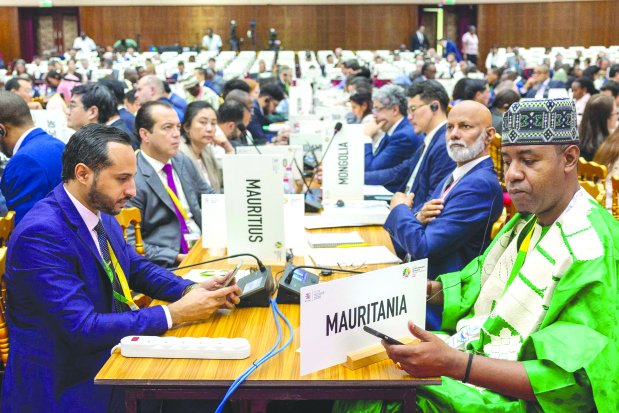
WTO talks on extending a moratorium due to expire this month on customs duties for electronic transmissions such as digital downloads are deadlocked, diplomats said yesterday, although a wider reform plan is nearing a deal.
The talks at a World Trade Organisation meeting in Cameroon include efforts to bridge differences between the US and India over extending the e-commerce moratorium, which was first adopted in 1998 to help encourage early digital trade growth.
In what is seen as a test for the WTO’s relevance, after a year of tariff-fuelled trade turmoil and major disruptions due to the Iran war, three diplomats told Reuters that ministers are stuck on extending the moratorium beyond more than two years following objections from Brazil.
Ministers are debating a new draft document to extend negotiations by four years plus an additional buffer year to 2031, two diplomats said.
As well as Brazil’s objections, India and the US have been far apart in their positions on the e-commerce moratorium, with India indicating it would accept a two-year extension, diplomats said, while the US Trade Representative Jamieson Greer said this week Washington wanted a permanent one.
A draft document seen by Reuters proposed support for developing country members concerned about losing out on tax revenues, as well as a review clause.
Business leaders say an extension is vital to guarantee predictability, fearing duties could otherwise be introduced. It is also seen as key to securing US support for the WTO.
“If the moratorium does not get extended, the US will use it as an excuse to beat the WTO on the head,” a senior diplomat said.
After initial resistance from some WTO members, a new draft of the reform roadmap, seen by Reuters, that provides a timeline for progress and sets out the key issues to address is close to being agreed, three diplomats said.
Those include improving decision-making in a consensus-based system that has long been stymied by a few countries, and the trade benefits extended to developing countries.
The reform debate comes amid efforts to rework WTO rules to render subsidy use more transparent and make decision-taking easier. The US and European Union argue China in particular has taken advantage of current rules to their detriment.
Bringing into WTO rules a deal reached by a subset of members aimed at boosting investment in developing countries also remains blocked by India.
&uuid=(email))