

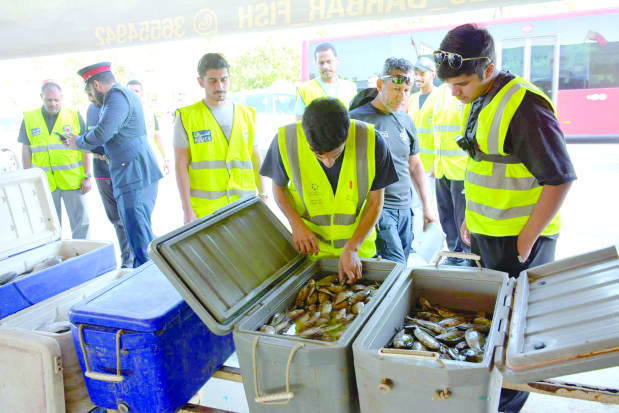
The government has been urged to temporarily lift a seasonal ban on catching local fish varieties to ease mounting pressures on fishermen and the wider community.
Parliament is set to debate a proposal led by Strategic Thinking Bloc spokesman MP Khalid Bu Onk, calling for the suspension of Resolution No (2) of 2024, which prohibits the fishing of safi, sheri and andaq from tomorrow until May 31.
MPs say the move is crucial amidst exceptional economic conditions and supply chain disruptions triggered by recent regional tensions.
The proposal notes that fish imports have dropped while prices have surged, leaving limited alternatives in the market and increasing pressure on consumers and traders alike.
According to the Supreme Council for Environment (SCE), the seasonal two-month ban comes as part of measures taken by the kingdom to preserve fish stocks namely sheri, safi and andaq. Over the past few years, legal action has been taken against violators, who are referred to the Criminal Courts.
An annual six-month ban on fishing and trading shrimp is also currently underway until July 31, alongside a ban on catching crabs until May 15.
Last year, fishermen across Bahrain appealed to authorities to revise the seasonal ban on catching safi, sheri, and andaq, arguing that the restrictions were making it increasingly difficult for them to make ends meet.
The debate today is expected to draw strong interest from MPs representing coastal communities, fishermen, and market traders, many of whom have voiced concerns in recent months over declining catches, rising costs, and shrinking profit margins.
Mr Bu Onk said the situation in local markets had reached a point where urgent legislative flexibility was required.
“The original decision to regulate fishing and protect marine resources was sound and necessary,” he said.
“However, the current regional developments have disrupted imports and significantly driven up fish prices. Under these circumstances, relying on local production is no longer a choice – it is a necessity to protect food security and consumers.”
He stressed that the proposal does not seek to cancel the regulation, but to suspend it temporarily until market conditions stabilise.
“This is a precautionary step to restore balance between environmental sustainability and the daily living needs of citizens. Fishermen are struggling, supply is shrinking, and prices are rising. Parliament must respond with practical solutions.”
Meanwhile, Strategic Bloc member and Parliament’s financial and economic affairs committee chairman MP Ahmed Al Salloom said the issue had clear economic dimensions that warranted serious consideration.
“This is not only a fisheries matter; it is directly linked to market stability, pricing, and food supply,” he said.
“When supply chains are affected regionally, internal production must be supported. A temporary suspension can ease pressure on markets while maintaining regulatory oversight.”
He added that the committee had consistently emphasised the need to balance environmental protection with economic realities.
“Legislation must be flexible enough to respond to exceptional circumstances. The goal is to ensure availability of essential goods at reasonable prices without undermining sustainability,” he said.
The proposal argues that the continued enforcement of the ban in the current climate could worsen scarcity and inflate prices further, particularly given the high cost and limited availability of imports.
MPs have stressed the need to suspend the ban until economic and political conditions improve and regional supply chains return to normal.
mohammed@gdnmedia.bh
&uuid=(email))