

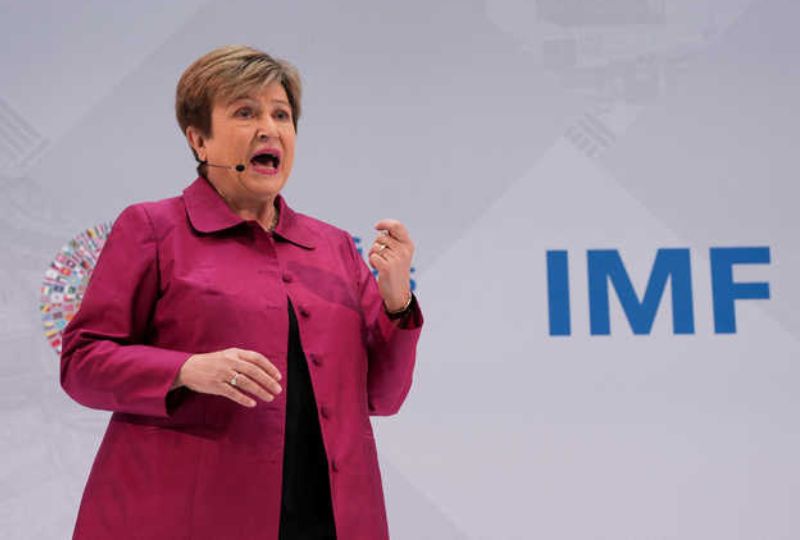
International Monetary Fund (IMF) chief Kristalina Georgieva yesterday said the global lender expected near-term demand for IMF financial support to rise to between $20 billion to $50bn as a result of spillovers from the war in the Middle East.
Georgieva said the now-paused war was testing the global economy, with a 13 per cent cut in the daily flow of the world’s oil and a 20pc cut in liquefied natural gas triggering a supply shock that had sent energy prices soaring, while disrupting supply chains.
Speaking at the IMF’s headquarters ahead of next week’s meetings of the IMF and World Bank, Georgieva said the war had prompted the Fund to cut its global growth forecast, echoing a message she shared with Reuters on Monday.
“Had it not been for this shock, we would have been upgrading global growth,” Georgieva said, citing momentum from strong investments in technology and supportive financial conditions.
“But now, even in our most hopeful scenario, it involves a downgrade of growth.”
US President Donald Trump on Tuesday announced a two-week ceasefire with Iran, but Israel’s continued bombardment of Lebanon threatens to derail talks to forge a permanent peace.
Georgieva said the war posed significant but differentiated risks to IMF members, with net oil importers – 80pc of countries – affected by rising prices and supply shortages, even as major oil exporters and non-oil economies in the region had been disproportionately hit.
“Even in a best case, there will be no neat and clean return to the status quo ante,” Georgieva said.
Qatar’s Ras Laffan complex, which produces 93pc of the Gulf’s LNG, for instance, had been shut since March 2 and could take three to five years to return to full capacity.
“The fact is, we don’t truly know what the future holds for transits through the Strait of Hormuz, or for that matter, for the recovery of regional air traffic,” she added, flanked by graphics showing the dramatic plunge in air and ship traffic over the last six weeks.
“What we do know is that growth will be slower – even if the new peace is durable.”
The IMF will release a range of scenarios in its World Economic Outlook next week, going from a relatively swift normalization to a scenario that saw oil and gas prices remaining much higher for much longer, Georgieva said.
&uuid=(email))