

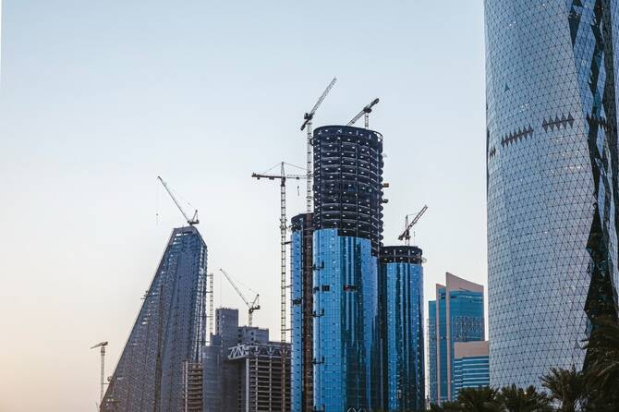
Saudi Arabia’s real estate sector remained resilient in the first quarter of 2026 despite regional tensions, supported by structural demand drivers, regulatory reforms and continued investor confidence, according to CBRE.
In its latest market review, the real estate consultancy said the kingdom’s property sector recorded solid growth in the first quarter, with total transaction values reaching SR112 billion ($29.85bn), up 6.8 per cent from the same period a year earlier.
The report said the sector continues to benefit from Vision 2030 reforms, strong domestic demand and large-scale development activity tied to giga-projects, tourism expansion and infrastructure investments.
Bolstering the property market is a central pillar of Saudi Arabia’s economic diversification strategy as the kingdom seeks to establish itself as a global tourism and business destination. The Real Estate General Authority expects the sector to reach $101.62bn by 2029, with a projected compound annual growth rate of 8pc from 2024.
Commenting on the sector’s growth trajectory, Joclaire Carrasco, co-founder and COO of Mirai Real Estate Consultancy & Advisory, said the market’s resilience reflects the cumulative impact of reforms introduced over the past decade.
“Vision 2030’s Regional Headquarters program has pulled hundreds of multinationals into Riyadh, creating recurring, salary-backed demand rather than speculative interest,” Carrasco told Arab News.
Carrasco noted that a young population pushing toward 70pc homeownership, combined with Expo 2030, the AFC Asian Cup, and FIFA 2034, is creating demand catalysts extending well into the next decade.
According to CBRE, Riyadh’s Grade A office market remained exceptionally tight during the first quarter, with occupancy levels hovering near 98pc.
Technology firms accounted for 53pc of office demand, followed by professional and financial services. Prime rents have shown measured growth, and the market is absorbing new stock effectively while maintaining a structural shortage of top-tier space. Jeddah’s Grade A occupancy stands at 94pc with stable rents, while Dammam’s premium segment holds steady at 91 percent.
The consultancy said the residential sector is undergoing a broader recalibration, with Riyadh rental rates softening 2.1pc year on year in March 2026 following regulatory reforms introduced in late 2025.
Under new Real Estate General Authority regulations, rents for existing leases remain fixed at September 2025 levels, while new-to-market inventory must align with values recorded on the Ejar platform.
The hospitality sector also posted strong performance during the quarter, with Saudi welcoming a record 37.2m domestic and inbound tourists, generating SR82.7bn in spending.
Domestic tourism accounted for 28.9m travellers, marking a 16pc year-on-year increase and contributing SR34.7bn in spending.
Carrasco also described the rollout of the Law of Real Estate Ownership by Non-Saudis as a “watershed moment,” adding that the legislation was well designed.
&uuid=(email))