

Striking designs inspired by iconic Islamic heritage were brought alive through a collaboration between young talents and local artisans at an exhibition inaugurated yesterday.
Form Craft, staged at Al Jasra Crafts Centre, was graced by Bahrain Authority for Culture and Antiquities (Baca) director-general of heritage Shaikh Mohammed bin Khalifa Al Khalifa as the chief guest.
Bahrain University Engineering College architecture and interior design department chairwoman Dr Noor AlDoy also attended the event, along with other guests.
A total of 16 creations, including lighting fixtures, apparel pieces and desk and home accessories, were shortlisted from 30 submissions for the display. They have been produced by Bahrain University’s 21-year-old design students as part of their final course titled ‘Islamic Geometrical Patterns and Motifs’. Some of the young creatives worked with craftsmen from Al Jasra village, while others tied up with their own families that preserve an inherited local craft.
Visitors will be able to engage with pieces featuring traditional palm frond weaves and woodwork adorned with pearls on gold wire, all nodding to Bahrain’s endearing heritage and crafts.
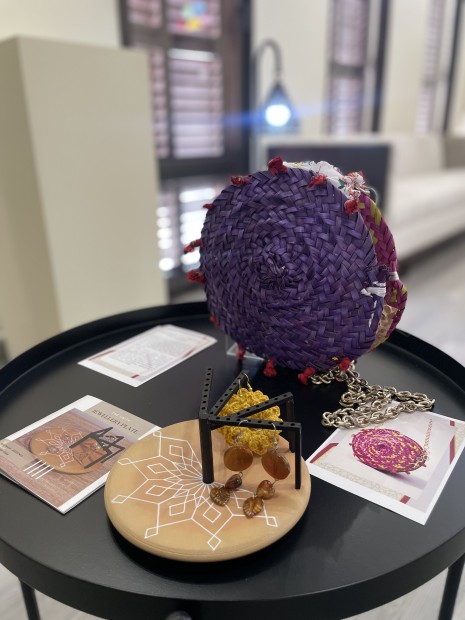
Traditional weaves take centre stage
“In a world increasingly saturated with what artificial intelligence and technology can do, there is a pressing need to protect intangible heritage in all its forms – without treating it as a relic or aesthetic afterthought,” exhibition curator and Bahrain University architecture and interior design department assistant professor Tamadher Alfahal told the GDN.
“This curatorial stance begins with recognition: culture is not decoration. It is lived, relational and ethically bound to community values. Accordingly, design must be approached with attentiveness to embodied realities. To sustain an authentic voice today, designers are called to treat cultural production as a living ecosystem – one that affirms the dignity of local knowledge, while using technology only when it supports the process rather than interrupts it. The aim is not preservation through stagnation, but continuity through responsible, contemporary engagement,” added the 39-year-old designer, educator and researcher.
Ms Alfahal’s practice extends from co-founding community art projects to art installations. Her areas of interest are cultural identity, cultural design, art collaboration and the creative process.
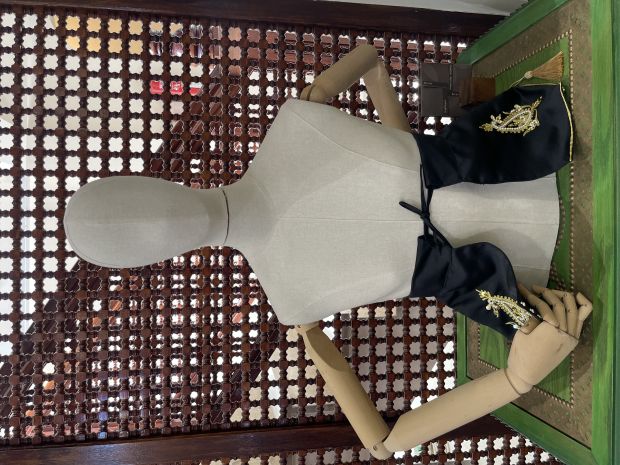
One of the creative designs on display
Talking about the inspiration behind the exhibits, she explained that there were four main design principles – unity, modesty, balance and remembrance.
“The young designers incorporated personal stories and the stories of the craftsmen they collaborated with. The overarching concept of the collection was to treat the artisans as active collaborators in the design process. It took around four weeks to conceptualise, prototype and finalise the products.
“The students crafted a selection of designs through Islamic philosophical principles integrated into both method and outcome. The guiding principles – unity modesty, balance and remembrance – served as a framework for making, prompting careful reflection on how form, function and meaning cohere.”
Zainab Mohamed’s piece ‘Siraj Ameen’ is a lighting fixture for book lovers that is inspired by the hammering effect of a craftsman’s hand on the material. Through it, she paid tribute to her late uncle who was a metalsmith.
“It was rewarding to work on something rooted in Bahrain’s heritage and reinterpret it in a contemporary way. I also appreciated the chance to exhibit the project and connect with a wider audience,” Ms Mohamed from Budaiya said.
Waad Mohamed designed a multifunctional heritage-inspired book holder with a reading light and storage. “Developing a product that blends Bahraini craftsmanship with contemporary functionality was a valuable learning experience. Sharing the final design with others highlighted the importance of preserving heritage through modern design,” the Riffa resident noted. Another lighting fixture by Asma Janahi titled ‘Arjon’ balances the use of contemporary and traditional methods and materials.
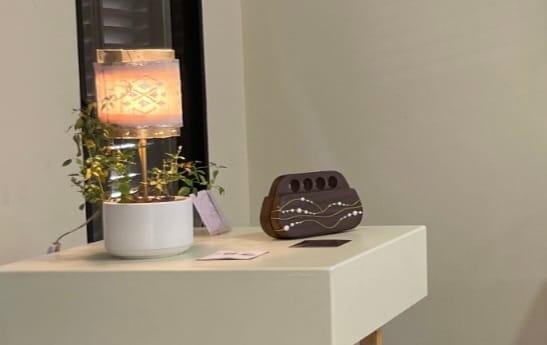
The wooden clutch ‘Sard’ by Majd Ahmed is yet another standout piece, Ms Alfahal revealed.
The exhibition is open for viewing and concludes today.
melissa@gdnmedia.bh
&uuid=(email))