

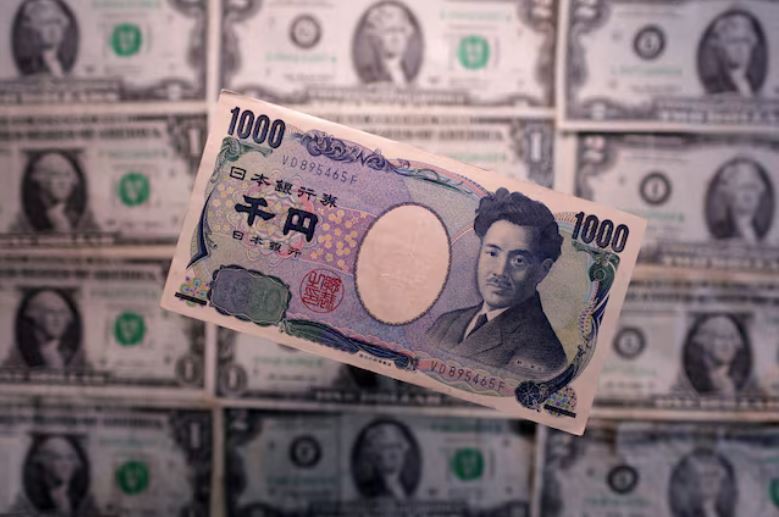
The yen fell to its weakest in nearly four weeks against the US dollar yesterday, inching towards levels that triggered official Japanese intervention last month, as markets weighed a renewed flare-up in the Iran war.
The yen was steady at 159.40 per dollar, its weakest since April 30, when Japanese authorities stepped in to buy the currency.
The 160 level is widely seen by traders as a threshold for intervention after the yen crossed it last month.
“They’ve intervened formally and the market is fully calling their bluff,” said Eugene Epstein, head of structuring for North America at Moneycorp in New Jersey.
“This is not the first time this has happened. In the past this exact playbook plays out: they intervene and the market says ‘we don’t believe you’ and they intervene again and the market says ‘we believe you this time’. I would argue that the market will most likely test the Bank of Japan again.”
BOJ Governor Kazuo Ueda struck a somewhat hawkish tone yesterday, saying a war-driven oil shock could become persistent in an environment of high inflation expectations and rising wages.
Markets are pricing in a 70 per cent chance of a quarter-point hike at the BOJ’s next policy meeting on June 15 to 16, according to LSEG data.
The safe-haven US dollar steadied after edging higher against other major currencies a day earlier, as the latest US strikes on Iran dented optimism for a near-term end to hostilities and a reopening of the crucial Strait of Hormuz shipping channel.
US Secretary of State Marco Rubio said negotiating a deal to halt the conflict could “take a few days.”
The euro was a shade lower at $1.1628, while the pound was down 0.16pc at $1.343.
The dollar was up 0.15pc to 0.787 against the Swiss franc.
The dollar index, which tracks the US currency against the yen and five other peers, was little changed at 99.2 and on track for a second straight day of gains.
&uuid=(email))