

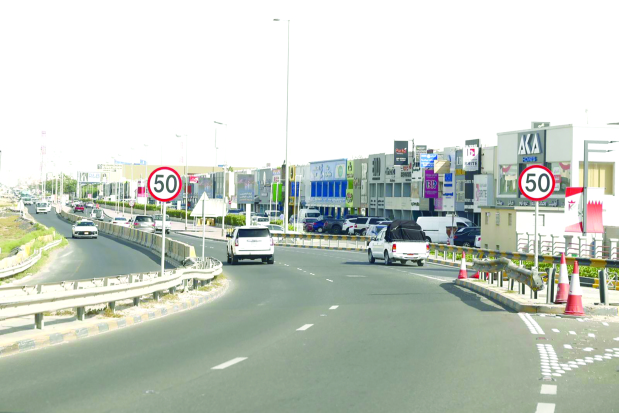
The Southern Municipal Council is urging tougher action not just against speedsters, but against lane hoggers and motorists who drive too slowly on Bahrain’s roads, avenues and highways.
Council chairman Abdulla Abdullatif says overly cautious motorists are unintentionally creating dangerous conditions by crawling along major roads well below the limit, prompting the council to call on the Interior Ministry to introduce a system that prevents vehicles from dropping below 80kmph on main highways.
At present, AI-powered traffic cameras penalise motorists who hog the fast left lane at low speeds. But the council says the problem runs deeper.
“We are seeing drivers who are so afraid of being caught by cameras that they drive at unnecessarily low speeds even when road conditions are perfectly safe,” said Mr Abdullatif. “This behaviour disrupts traffic flow, causes frustration and can be just as risky as reckless driving. Highways are designed for smooth, consistent movement – not hesitation.”
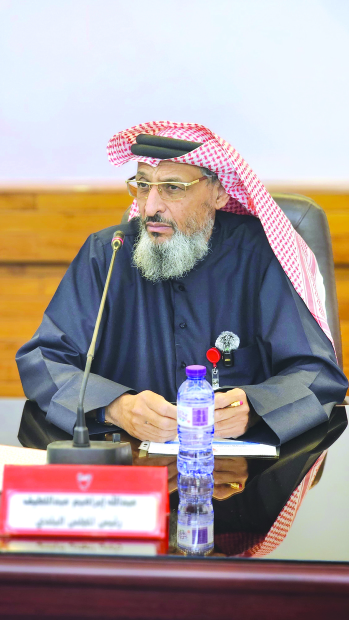
Mr Abdullatif
He stressed that this issue is separate from the council’s earlier call to review speed limits.
“Both matters relate to road use, but they should not be mixed up. One concerns the limit itself. The other concerns drivers operating far below what is reasonable for a highway, avenue or road.”
Experts suggest that driving significantly below the speed limit on a highway is dangerous because it disrupts the smooth flow of traffic. It forces faster-moving vehicles to brake suddenly, triggers erratic lane-changing, and causes frustrating traffic bunching that significantly increases the risk of multi-car collisions.
Council services and public utilities committee chairman Ali Al Shaikh pointed out that similar technology is already in place elsewhere in the region.
“In the UAE, AI systems are programmed to detect and fine drivers who move too slowly on highways,” he said. “Traffic safety is about balance. Excessive speed is dangerous – but so is excessive hesitation.”
Councillor Abdulla Darraj agreed, warning that fear behind the wheel can be as hazardous as overconfidence. “A scared driver is unpredictable,” he suggested. “They brake suddenly, hesitate to merge and create confusion for others. This unpredictability leads to accidents.”
A slow driver often causes the cars directly behind them to hit their brakes. This reaction ripples backward, causing an ‘accordion effect’ that often leads to sudden, heavy braking and accidents further down the line.
And, drivers who enter a highway at abnormally low speeds disrupt the acceleration and merging space for other vehicles, forcing sudden lane shifts.
The most annoying and dangerous action involves driving slowly in the middle or passing lanes – often referred to as lane hogging – because someone is concentrating on their phone instead of the road ahead. It prevents traffic from flowing normally and forces other vehicles to make improper overtaking manoeuvres.
The call comes as Bahrain prepares for the full rollout of a major smart surveillance upgrade by the General Directorate of Traffic, involving 500 AI-powered cameras across the kingdom.
The system, supplied by Beyon Solutions, is already being piloted at selected locations to test performance, integration and technical efficiency.
The cameras not only detect violations but also link traffic lights directly to the central traffic control room.
Officials say the initiative is part of a broader strategy to modernise infrastructure, strengthen enforcement and improve road safety using advanced technologies.
It follows sweeping amendments to Bahrain’s Traffic Law under Law 23 of 2014, introduced by decree from His Majesty King Hamad.
Since August, tougher penalties have come into force:
- Jumping a red light: up to six months in jail and fines between BD200 and BD1,000
- Failing to slow near populated areas, schools or intersections: fines up to BD100, rising to jail and BD3,000 if damage occurs
- Driving under the influence: Two months to one year in jail and fines up to BD2,000
The stricter regime followed a fatal crash in Saar last year in which a couple and their child died after a head-on collision involving a drunk driver.
Authorities have since intensified patrols and awareness campaigns alongside the technology upgrade.
Now, councillors believe the next step is addressing the other extreme on Bahrain’s roads. “Safe driving is not just about avoiding high speed,” said Mr Darraj. “It’s about driving with confidence, awareness and responsibility – at a speed that suits the road.”
The proposal has been referred to Municipalities Affairs and Agriculture Minister Wael Al Mubarak to forward to Interior Minister General Shaikh Rashid bin Abdulla Al Khalifa for review.
mohammed@gdnmedia.bh
&uuid=(email))