

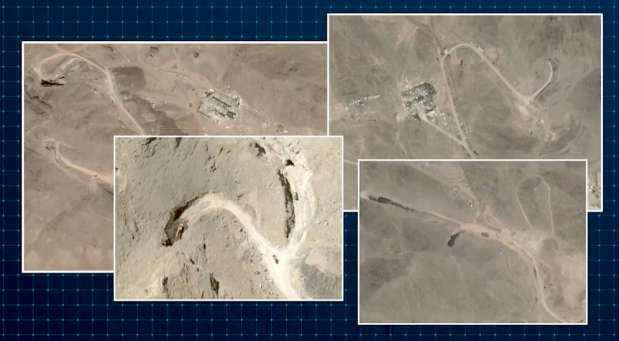
Iran has been able to dig out its buried arsenals, regaining access to at least 50 underground missile facilities bombed by the United States and Israel during the war, a CNN report revealed.
For weeks, strikes by the United States and Israel restricted Iran’s access to its underground missile sites by destroying roads and burying tunnel entrances. But, satellite images reviewed by CNN show how Iran has used simple equipment such as bulldozers and dump trucks to counter those costly campaigns – suggesting that Tehran’s missile capabilities can’t be destroyed just by targeting tunnel entrances, experts said.
During the fighting, Iran worked to excavate the tunnel entrances at great peril, with the US and Israel often striking the equipment used for digging. That work enabled Tehran to continue firing missiles throughout the war, though at vastly reduced rates. Since the ceasefire more than seven weeks ago, Iranian efforts to excavate the bases have accelerated significantly.
CNN found that Iran has now unblocked 50 out of the 69 tunnel entrances struck by the US and Israel at 18 underground missile facilities. Iran has repaired other parts of the bases as well, including roads that the US and Israel bombed to prevent missile launchers from using them. Satellite images show almost all these craters have now been filled, and at two sites, even repaved.
Pentagon spokesman Sean Parnell did not respond to specific questions about CNN’s findings, repeating an earlier statement that “America’s military is the most powerful in the world and has everything it needs to execute at the time and place of the President’s choosing.”
President Donald Trump has repeatedly pointed to Iran’s arsenal of missiles as a reason for the war, with its destruction being one of the key goals. In a March post to Truth Social, Trump listed “completely degrading Iranian Missile Capability, Launchers, and everything else pertaining to them” as one of five “objectives” of the war.
Satellite images reviewed by CNN at the time showed facilities like the Isfahan North Missile Base, a key underground missile location, ravaged by multiple strikes with rubble covering tunnels and launchers destroyed outside.
The US and Israel also undertook a broad effort to wreck Iran’s missile supply chain, from factories where small electronic components are produced, to the sites where rocket propellants and missile bodies are manufactured.
Experts believe Iran still has around 1,000 missiles stored in the underground sites.
That stockpile, deep below the surface, is unlikely to have sustained much damage from strikes at ground level, according to experts who said that Iran has been preparing for this kind of war for decades.
&uuid=(email))