

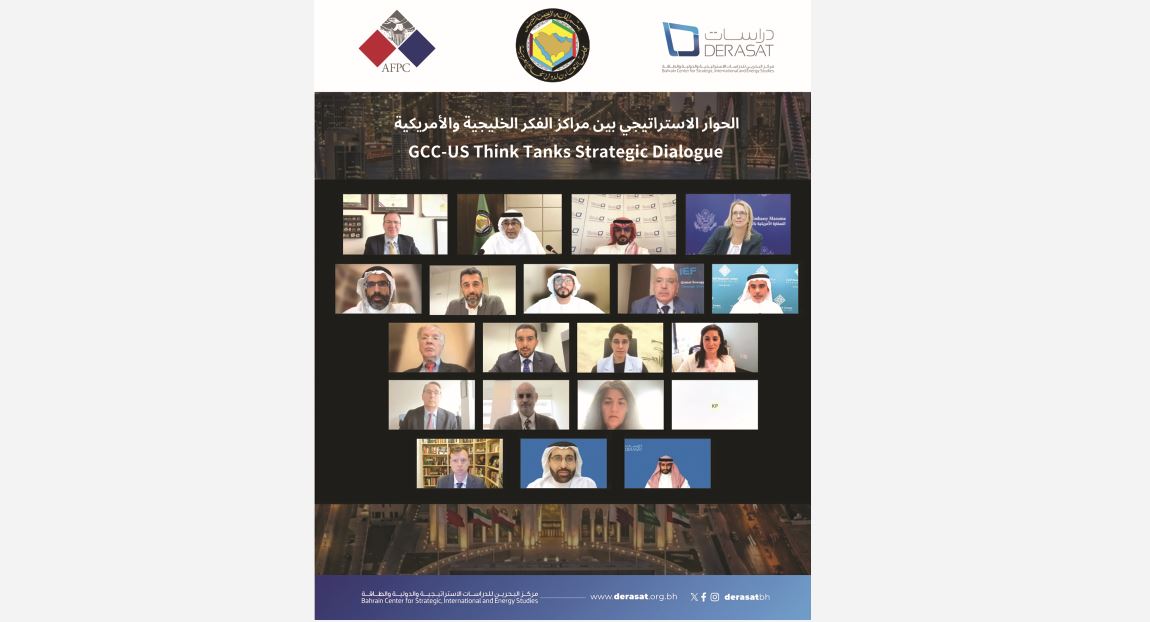
Iran’s unprovoked attacks targeting the security of Gulf states came under the spotlight during the launch of the GCC-US Think Tank Strategic Dialogue yesterday.
The initiative is jointly organised by the Bahrain Centre for Strategic, International and Energy Studies (Derasat) and the American Foreign Policy Council (AFPC), in co-ordination with the GCC General Secretariat.
The launch brought together senior leaders and representatives of leading think tanks from the GCC states and the US in a closed-door webinar. They examined the future of the GCC-US partnership amid the region’s rapidly evolving security and economic landscape, and assessed the implications for regional security, energy security and economic integration.
GCC secretary-general Jasem Al Budaiwi, in his opening remarks, underscored the need to move beyond crisis management towards the development of an integrated regional security architecture capable of responding effectively to emerging challenges.
He added that the region’s security challenges require a shared strategic commitment to define the post-war era and address its complex, interconnected challenges.
Deasat chief executive officer Abdulla Alahmed said the dialogue is intended not only to assess recent developments, but also anticipate future trends, draw strategic lessons, and formulate practical policy recommendations that will strengthen GCC-US co-operation and contribute to advancing regional stability.
The inaugural dialogue marks the first in a series of in-person engagements that will bring together GCC and US think tanks alongside the GCC General Secretariat in Washington D C and Manama later this year, coinciding with Bahrain’s presidency of the 46th Session of the GCC, Mr Alahmed noted.
Participants also stressed that recent developments – including Iran’s attacks targeting the GCC states’ critical infrastructure, maritime routes, and freedom of navigation – underscore the importance of upholding national sovereignty and respect for international law.
&uuid=(email))