

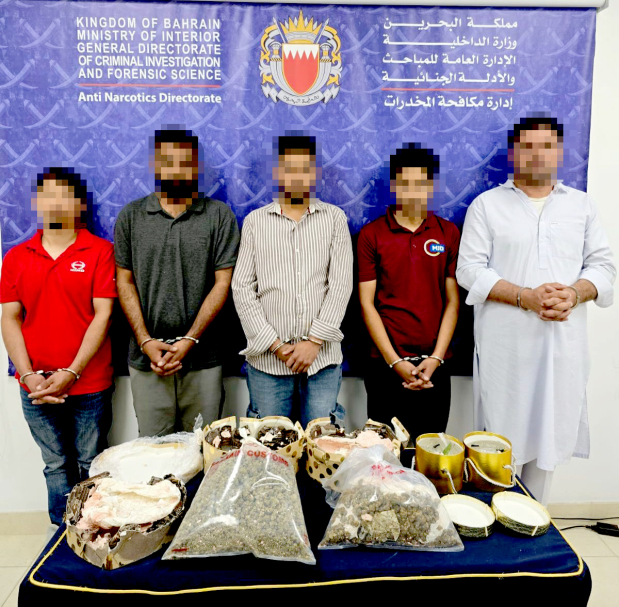
More than 2,000 drug-related cases were reported last year by the kingdom’s authorities as they continued to crack down on illicit substances to protect the community.
Speaking to the Interior Ministry’s Al Amn magazine, Anti-Narcotics Directorate director Colonel Mohammed Al Buainain said that security plans are being continuously updated to curb the smuggling of narcotics and psychotropic substances in the kingdom.
Col Al Buainain said that the kingdom’s authorities rely on comprehensive and advanced security systems to secure all of Bahrain’s entry points, including advanced detection equipment.
“Last year, a total of 2,006 drug cases were reported, including 1,509 cases inside the country, 218 at King Fahad Causeway, 269 at Bahrain International Airport, and two at Khalifa Bin Salman Port,” he said.
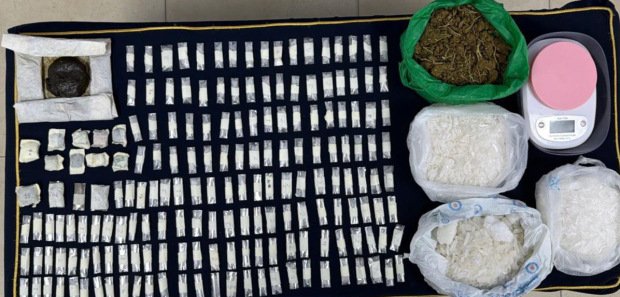
Drugs seized by the authorities following a raid in December
“Out of that, 136 cases were classified as smuggling, 177 were trafficking of illicit substances, 1,464 were for personal use, 212 were of unknown ownership, and 17 were described as ‘other’ cases.
“A total of 475 drug cases were reported during the first quarter of this year, including 348 inside the country, 42 at King Fahad Causeway and 85 at Bahrain International Airport.
“These included 73 cases of smuggling, 46 case of trafficking, 348 cases of use, and seven cases classified as ‘other’ cases.
“In order to secure the kingdom’s entry points, the directorate works in co-ordination with Customs Affairs, the Coastguard, Police Aviation, and the Financial Investigations Directorate.
“Efforts include the use of high-resolution x-ray machines, police dogs, meticulous inspection of vehicles, individuals and goods, and smart surveillance systems.”
Col Al Buainain said that recent periods have seen a noticeable diversification in the type of narcotics seized, including traditional substances.
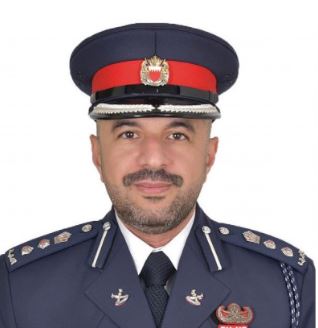
Col Al Buainain
Hashish and synthetic drugs such as methamphetamine (commonly known as shabu), are among the most dangerous substances due to their devastating effects on the nervous system, mental health and personal behaviour.
The spread of narcotic pills and psychoactive substances targeting young people has also been observed due to their ease of access and low cost.
Furthermore, there are attempts to introduce new substances such as synthetic liquids.
“Promotion and distribution networks primarily target young people,” said Col Al Buainain.
“The substances are often marketed under misleading names or as innocuous products with the aim of circumventing security measures and deceiving recipients.
“One of the most prominent methods is the dead drop, which relies on concealing the substance in a pre-arranged location without direct contact, reducing the likelihood of direct apprehension.
“However, no matter how skilled smugglers become in devising new methods, the authorities possess the training and equipment necessary to foil their attempts.”
In order to raise awareness, Col Al Buainain said that various media channels have been launched and exhibitions, workshops and lectures have been arranged in schools to protect youngsters from the scourge of drugs.
“It is also important for families to play a role, monitor their children, and intervene early if they suspect any drug use,” he said.
“The directorate is working on utilising artificial intelligence to monitor suspicious websites and analyse drug promotion patterns.
“Campaigns including lectures and exhibitions in schools and universities, workplaces, sports clubs, places of worships have also been organised.
“These aim to equip children with the skills to reject drug use, and guide users to practical and healthy methods of treatment.”
nader@gdnmedia.bh
&uuid=(email))