

GERMAN exports and industrial production beat expectations in June, adding to signs that Europe’s largest economy gained momentum in the second quarter, though economists warn the upturn may not prove sustainable.
German industrial production rose 0.2 per cent in June from the previous month, the statistics office said, above analysts’ expectations for a 0.1pc increase in a Reuters poll.
The increase was driven by a 3.6pc month-on-month rise in automotive output and an 8.4pc jump in other transport equipment production, including aircraft, ships, trains and military vehicles.
Despite higher energy prices and uncertainty linked to the Iran war, German industry has continued to recover modestly. June marked a third consecutive monthly increase, confirming that industrial output rose in the second quarter.
“This does not change the fact that industrial production is moving sideways at a low level,” said Marco Wagner, senior economist at Commerzbank.
The hit to business from low water levels on the Rhine is unlikely to change that over the summer, he added.
Business surveys, including the manufacturing PMI and Ifo business climate index, improved in July, pointing to continued momentum in manufacturing in the third quarter. German industrial orders rose 3.1pc in June, data showed on Thursday.
“However, don’t mistake a cyclical rebound for structural improvement,” said Carsten Brzeski, global head of macro at ING.
Brzeski pointed to recent Chinese trade data showing Germany’s bilateral trade deficit with China widened in July, “indicating that any cyclical improvement in industry should not obscure the view of German industry’s structural problems.”
At the start of July, Chancellor Friedrich Merz unveiled a package of pension, tax and labour reforms to boost growth, jobs and competitiveness, aiming to address longer-term structural issues that have held back German growth for years.
But any recovery will likely be slow, Commerzbank’s Wagner said. “After all, the government’s planned reforms will do little to improve Germany’s embattled position as a business location.”
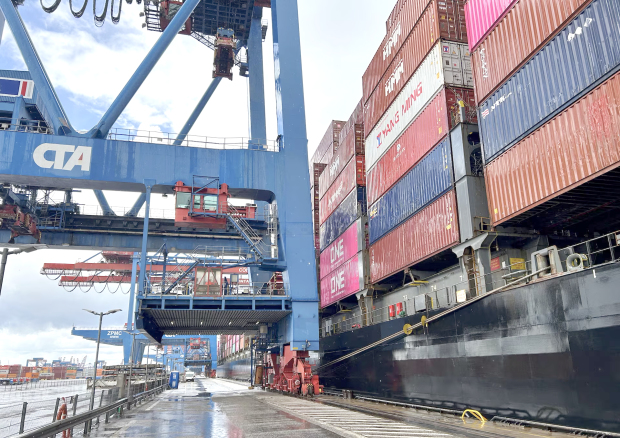
Exports rose 0.9pc in June from the previous month, extending their run of gains to five months, statistics office data showed. The increase beat expectations for a 0.2pc rise in a Reuters poll.
Germany exported a record €139.3 billion ($160.5bn) of goods in June, the data showed.
Imports rose 4.4pc from May on a calendar- and seasonally-adjusted basis. The trade surplus narrowed to €15.4bn in June from €19.3bn in May.
In the first half of 2026, exports rose 3.7pc from a year earlier, while imports increased 4.4pc.
“Export growth in the first half of the year is a ray of hope for the economy. However, it is too early to breathe a sigh of relief: the outlook for global trade remains bleak,” said Volker Treier, head of trade at the German Chamber of Commerce.
&uuid=(email))