

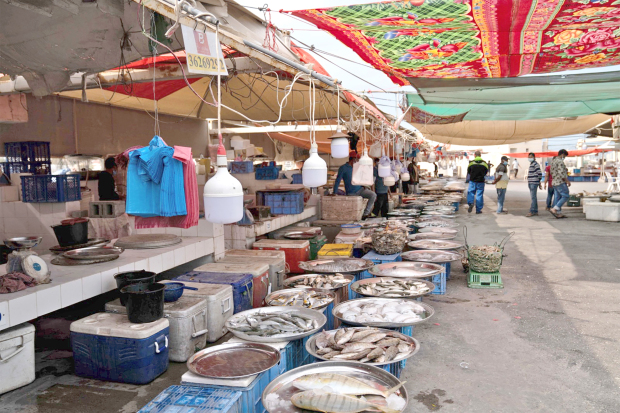
Bahrain consumed more than 25,000 metric tonnes of fish last year, according to data released by the Supreme Council for Environment (SCE).
Data published this week on the Bahrain Open Data Portal shows that in 2025, the kingdom’s local fisheries netted 16,961.30 tonnes of fish, valued at more than BD20 million and exported 12,427 tonnes.
In addition, around 20,495 tonnes of fish were imported to accommodate the island’s growing appetite.
Production by Bahrain’s local fisheries saw a marginal three per cent increase from 2024, rising by 495.07 tonnes from 16,466.23 tonnes to 16,961.30 tonnes.
Local consumption also increased 6pc from last year, from 23,582 to 25,029 tonnes.
Gargoor – the traditional dome-shaped wire or palm-frond fish trap – proved to be the most popular fishing method among local fishers, catching more than 10,670 tonnes of fish.
The gill net caught the second-most amount of fish – 3,020.90 tonnes – followed by hook and line (2,510.59 tonnes).
Last May, the SCE introduced a complete ban on the use of handlines (khayya) to safeguard biodiversity and marine resources, and as a result, the traditional fishing longline method was the least used method.
A total of 7,815.16 tonnes of fish went through just the Manama Central Market, with November and December proving to be the busiest months, with 1,055.15 and 965.51 tonnes respectively moved through the market.
Bahrain also exported 426.69 tonnes of shrimp last year – a yearly drop of nearly 25pc since the previous year’s haul of 567.74 tonnes.
The number of fishers stayed steady, rising slightly from 4,420 last year to 4,429, with 1,373 registered fishing boats.
April last year showed the lowest haul of fish by local fishermen – just 371.26 tonnes – coinciding with the seasonal ban on fishing of popular fish including spangled emperor (Shaari), rabbitfish (Safi) and seabream (Andag), from April 1 to May 31, which was announced by the SCE last year.
Meanwhile, June was the best month for local fishermen last year, as they brought in 2,114.17 tonnes of fish, after the ban was lifted.
Out of an annual total of BD956,230 in shrimp exports, January was the most productive month, with BD313,100 in shrimp exported.
This spike in shrimp exports came shortly before the SCE’s six-month ban on shrimp fishing, trading, and sale in Bahrain’s territorial waters, effective from February 1 until July 31, to preserve fish stocks and protect Bahrain’s marine resources.
&uuid=(email))