

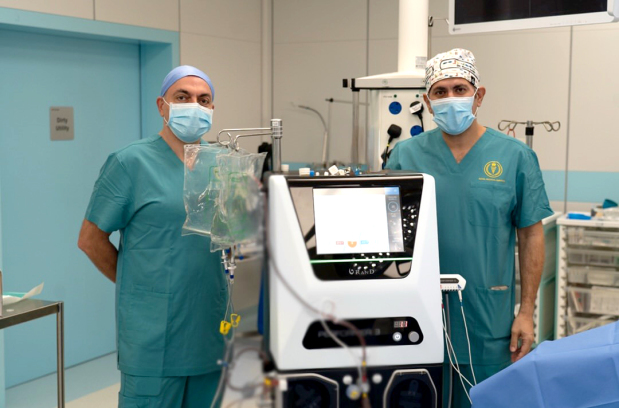
A new cancer treatment technology has been introduced in Bahrain, offering an advanced option for selected patients suffering from ovarian cancer, with one procedure already successfully completed in the kingdom.
The Hyperthermic Intraperitoneal Chemotherapy (HIPEC) technique has been introduced at the Bahrain Oncology Centre, alongside the installation of the P3 HIPEC system.
Bahrain is now only the second country in the Middle East to have the specialised system, according to the Royal Medical Services (RMS).
RMS Commander Brigadier Dr Shaikh Fahad bin Khalifa bin Salman Al Khalifa believes that advancing the oncology treatment system and developing its specialised capabilities are among the priorities aimed at keeping pace with global medical developments and enhancing the quality of healthcare provided to patients.
“The introduction of the latest treatment technologies, such as HIPEC, reflects the progress achieved by the RMS in medical and specialised capabilities, as well as its role in providing advanced treatment options in accordance with the highest standards,” said Dr Shaikh Fahad.
“The successful completion of the first surgical procedure using HIPEC at the Bahrain Oncology Centre to treat ovarian cancer represents a significant medical achievement.
“It demonstrates the integration of national and international expertise and competencies, as well as the centre’s medical and technological readiness. Continued investment in modern technologies and the development of specialised expertise would further strengthen the kingdom’s capacity to provide advanced oncology treatment services.”
HIPEC involves administering chemotherapy after it has been heated to a specific temperature directly into the abdominal cavity following the surgical removal of a tumour.
The aim is to deliver the treatment locally to the targeted area.
The administration of heated chemotherapy typically takes between 60 and 90 minutes, depending on the nature of the case and the approved treatment plan. It can be used in selected cases of tumours affecting the peritoneum, most notably ovarian cancer.
The specialist medical team determines its suitability for each individual case based on the nature of the tumour, the extent of its spread, the patient’s health condition and the approved medical criteria.
Led by consultant in gynaecological oncology surgery Dr Basil Rifqi, the procedure saw the participation of a multidisciplinary medical team comprising specialists in chemotherapy, clinical pharmacy, anaesthesia and nursing.
It was conducted under the supervision of consultant in general and reconstructive surgery, Oncology Surgery Department head and Women’s Health Centre head Dr Nouf Al Shaibani.
Dr Al Shaibani affirmed that the success of the first HIPEC procedure represents a step forward in providing treatment options for cases requiring a combination of surgical removal and localised chemotherapy.
She explained that the procedure was carried out following a thorough assessment of the case, the development of an integrated treatment plan and close co-ordination among the various participating medical specialities.
Bahrain Oncology Centre chief executive Dr Edward Rowland explained that the successful completion of the first HIPEC procedure represents a significant addition to the centre’s ongoing efforts to develop its oncology surgery and treatment services.
“It reflects the integration of medical expertise, modern equipment and the advanced infrastructure available at the centre,” said Dr Rowland. “The centre continues to strengthen its capabilities as an advanced specialised oncology centre, drawing on medical expertise and international accreditations.”
The celebrated Oncology Surgery Department – Gynaecological Oncology Unit recently obtained European training centre accreditation in gynaecological oncology surgery – the first centre in the GCC to achieve the standard, confirming the advanced level it has reached in its field.
nader@gdnmedia.bh
&uuid=(email))