

Bahrain has expressed its commitment to consolidate an integrated national approach to protecting the environment.
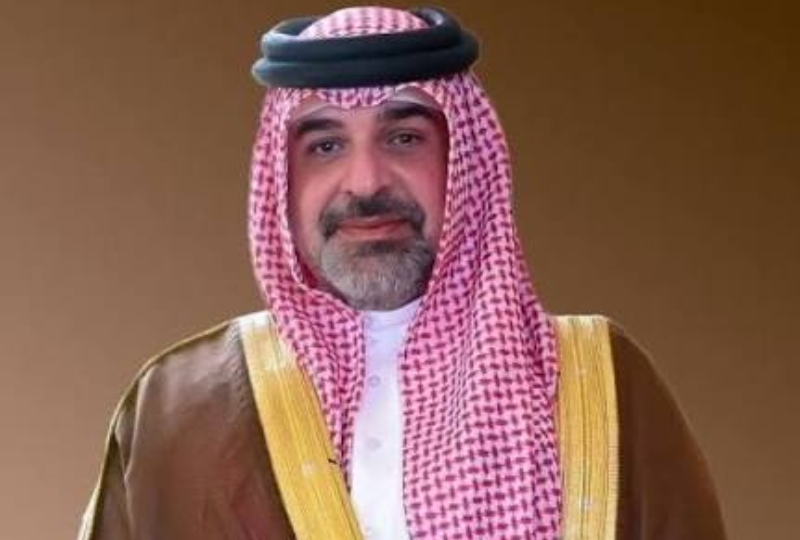
His Majesty King Hamad’s Personal Representative and Supreme Council for Environment (SCE) president Shaikh Abdulla bin Hamad Al Khalifa affirmed that Bahrain continues its efforts aimed at preserving its natural resources and fulfilling its international commitments through policies and initiatives that combine ozone layer protection, support for climate action, energy efficiency and the sustainability of the cooling sector, in line with global developments and advancing sustainable development in the kingdom.
Marking World Ozone Day, observed annually on September 16, Shaikh Abdulla said that this year’s global observance coincides with the 10th anniversary of the adoption of the Kigali Amendment to the Montreal Protocol. He noted that the occasion reflects the progress achieved through international co-operation in protecting the ozone layer, while highlighting the close links between ozone protection, climate action and the transition to more efficient and sustainable cooling solutions.
He affirmed that Bahrain’s progress in this field has been achieved under the patronage of His Majesty, who has consistently prioritised environmental protection and the achievement of sustainable development goals, as well as the directives of His Royal Highness Prince Salman bin Hamad Al Khalifa, Crown Prince and Prime Minister, which have contributed to strengthening national initiatives and policies aimed at protecting the environment, sustaining its resources and supporting the kingdom’s climate action efforts.
Shaikh Abdulla noted that Bahrain launched this year the third and final phase of the National Strategy for the Phase-out of Ozone-Depleting Substances (HPMP), to achieve a 100 per cent phase-out of hydrochlorofluorocarbons (HCFCs) consumption by 2030, in accordance with the kingdom’s commitments under the Montreal Protocol and the approved timelines.
He explained that reaching this advanced stage is the result of decades of continuous national efforts and effective partnerships between government entities, the private sector, technical institutions, and workers in the refrigeration and air conditioning sector. This has enabled the kingdom to implement its international environmental commitments in a considered and gradual manner, while maintaining the sustainability and efficiency of economic and service sectors.
He said that the next phase will go beyond the concept of gradually phasing out ozone-depleting substances towards a more comprehensive framework linking ozone protection, climate action, energy efficiency and the sustainability of the cooling sector.
In this regard, he referred to Decree 33 of 2024 ratifying the Montreal Protocol on Substances that Deplete the Ozone Layer, as amended through the 2016 Kigali Amendments, as part of the kingdom’s approach to gradually reducing hydrofluorocarbons (HFCs), which have a high global warming potential.
Shaikh Abdulla noted that the SCE, in co-operation with national and international partners, is preparing the Bahrain National Cooling Plan for 2026-2028, with implementation extending until 2047. The plan adopts an integrated approach that takes into account environmental and climate considerations, energy efficiency, technological developments and the needs of economic sectors, strengthening the kingdom’s ability to keep pace with global developments in this domain and establish long-term foundations for sustainability.
&uuid=(email))