

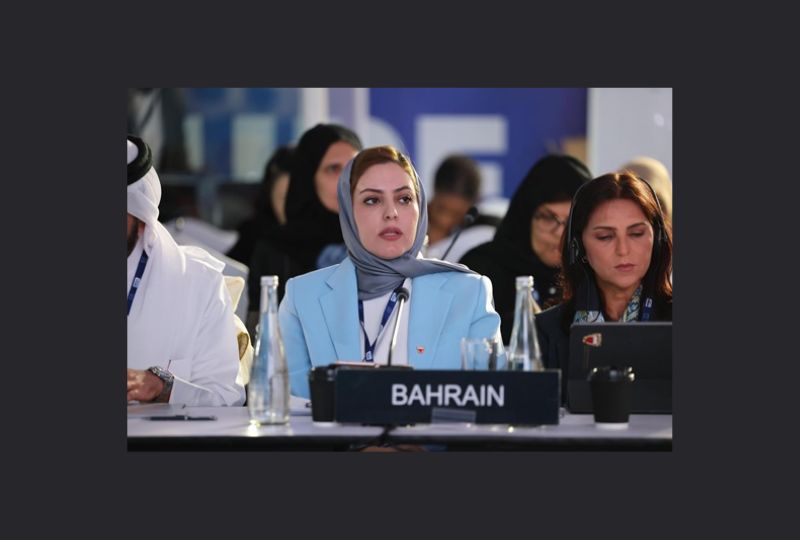
MP Zainab Abdulameer Khalil, member of the Bahrain Parliamentary Division delegation, highlighted Bahrain’s experience in promoting and empowering persons with disabilities, based on equal opportunities, inclusion and enhanced participation, under the directives of His Majesty King Hamad bin Isa Al Khalifa, and with the support of His Royal Highness Prince Salman bin Hamad Al Khalifa, Crown Prince and Prime Minister.
She made the remarks during the first session of the Parliamentary Women’s Forum, held under the theme "Inclusive Social Development for All: Parliamentary Strategies to Promote the Rights and Empowerment of Persons with Disabilities" from a gender perspective, as part of the 153rd General Assembly of the Inter-Parliamentary Union (IPU) in Arusha, United Republic of Tanzania, from October 5 to 9.
The meeting was attended by Jamal Mohammed Fakhro, First Deputy Chairman of the Shura Council and Head of the delegation, Hala Ramzi Fayez, Shura Council member and Deputy Head of the delegation, and MP Ali Saqr Al Doseri.
MP Abdulameer noted that Bahrain’s legislative authority has translated this approach into relevant legislative and institutional frameworks, notably Law (74) of 2006 on the Care, Rehabilitation and Employment of Persons with Disabilities. The law provides a framework for their care, rehabilitation, empowerment, and inclusion across various areas of life, alongside the Higher Committee for the Care of Persons with Disabilities' efforts to support relevant policies and programmes.
She added that the legislative authority has also supported the principles of equal opportunities and non-discrimination and followed up on relevant national policies to enhance the effective participation of persons with disabilities and expand their opportunities in education, employment and public life.
MP Abdulameer stressed that inclusive social development requires more than removing barriers facing persons with disabilities. It also requires understanding how such barriers affect women and men, and girls and boys differently, particularly women and girls with disabilities who may face overlapping challenges related to disability and gender, affecting their access to education, employment, economic independence, public participation and services.
She emphasised that parliaments have a role extending beyond legislation to assessing its actual impact on different groups, ensuring public policies are free from direct and indirect discrimination, and monitoring equitable and effective access to services and programmes for women and girls with disabilities. True inclusion, she said, is achieved when rights are not only guaranteed in legislation but can be exercised in practice on an equal basis and contribute to improving their lives.
&uuid=(email))