

When an elite athletic career ends, the change is abrupt. The daily structure, high-octane pressure, and primary revenue stream vanish overnight and few sports stars are genuinely prepared for what comes next.
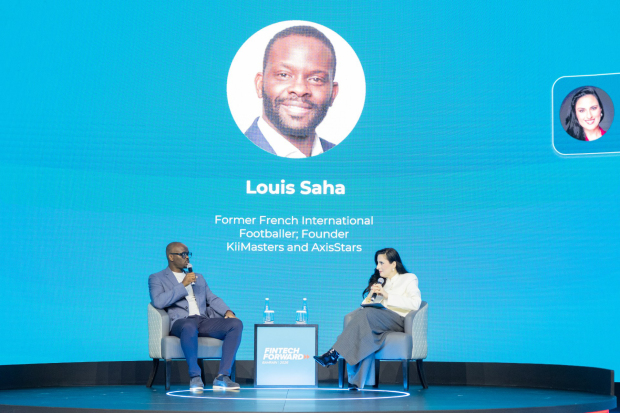
Former Manchester United striker and French international Louis Saha brought this reality into focus at Fintech Forward 2026 at Exhibition World Bahrain, breaking down his journey from top-flight football to tech entrepreneurship.
In a fireside conversation hosted by Forbes Middle East senior presenter Sally Mousa, the Premier League and Uefa Champions League winner outlined why financial literacy, active self-management, and tailored digital platforms are essential for helping athletes protect their wealth long after retiring.

Saha has won the Champions League, two Premier League titles, a World Cup silver medal, and has represented some of Europe’s most recognised clubs
Despite achieving top-tier success on the pitch, Mr Saha stressed that no amount of silverware shields a player from the abrupt loss of identity and routine that accompanies retirement.
“Nobody is really prepared to retire,” Mr Saha said. “You lose your routine, your comfort, and the daily passion you’ve known for years. It’s tough, and the main thing that pulls you through is resilience.”
Mr Saha explained that the mental discipline built during his playing career became his primary tool in building a post-sports career.
“My approach was simple. On a good day, you work; on a bad day, you still work,” he said. “With that mindset and a willingness to learn, you can treat every new challenge as an opportunity.”
As a former Premier League and France international footballer, Mr Saha won the Champions League, two Premier League titles and a World Cup silver medal, and represented some of Europe’s most recognised clubs, including Manchester United, Everton, Fulham and Tottenham Hotspur.
Following a distinguished playing career, he transitioned into entrepreneurship, founding KiiMasters, a technology venture designed to transform influence into measurable positive action, and AxisStars, a private networking platform now valued at £4.3 billion (BD2.17bn) that helps thousands of professional athletes navigate business, financial and career development opportunities.
Reflecting on his time under legendary manager Sir Alex Ferguson, Mr Saha shared leadership insights that now guide his approach to running businesses.
“Sir Alex had complete confidence in his knowledge, but he stayed grounded,” Mr Saha recalled. “He created an environment of high standards and accountability, but he also kept things light and approachable. That balance is crucial in any organisation.”
He noted that Ferguson’s style of management forced players to take ownership of their roles: “He never treated us like kids. He made you responsible for your own choices and performance. That level of trust is exactly what any CEO needs to build with their team.”
The conversation centred on a common vulnerability in professional sports: short careers paired with sudden wealth, often managed by unvetted third parties.
“When you’re young and playing, 100 per cent of your focus is on the pitch,” Mr Saha said. “I made my own mistakes early on by trusting advisors who simply weren’t the right fit. Many external managers don’t actually understand the day-to-day realities a player faces.”
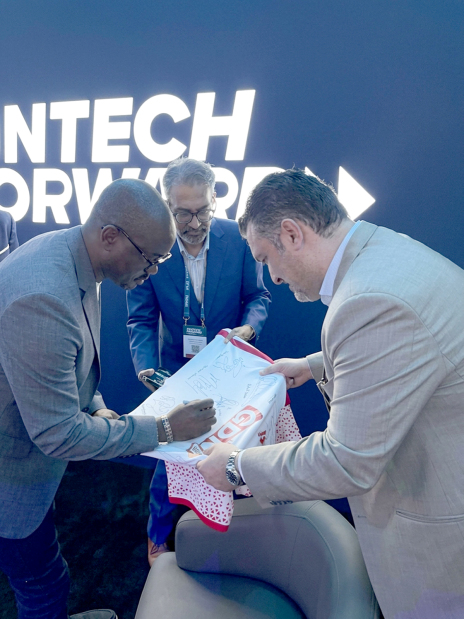
Saha, left, signs a GDN football jersey
To address this gap, Mr Saha co-founded AxisStars and KiiMasters as digital tools designed to connect athletes directly with vetted financial experts, mentors, and educational resources.
“In sports like tennis, players operate like independent small businesses from day one,” Mr Saha observed. “In football, almost everything is handled for you. Agents tell you, ‘Don’t worry about a thing,’ and 10 years later, you realise you know nothing about your own finances. That’s a dangerous place to be.”
Mr Saha noted that while social media gives modern athletes massive reach, it often creates noise rather than practical financial guidance. His goal is to give players structured, digestible insights so they can leverage their influence responsibly.
“When a high-profile athlete speaks, young audiences pay attention,” Mr Saha said. “If we can help former athletes become capable CEOs and leaders, that influence becomes a powerful force for good.”
avinash@gdnmedia.bh
&uuid=(email))