


Bahrain could look into international experience to build a flexible legal framework for artificial intelligence, labelled nowadays as super intelligence by the Americans, that protects people and addresses and acknowledges emerging risks without holding back innovation, Shura Council human rights committee vice-chairman Ali Al Shehabi has said.
With AI, or SI, rapidly moving into almost every aspect of modern life, Mr Al Shehabi believes Bahrain’s proposed legislation, originally presented by him amongst others, had to be broad enough to keep pace with technological change while giving regulators the tools to deal with high-risk applications.
The proposed legislation calls for the creation of a specialised AI unit, with responsibilities including co-operation with government authorities using AI technologies and monitoring compliance with the proposed law to reduce risks arising from misuse.
It also provides a legal route for people harmed by AI applications to seek compensation, including circumstances where more than one party may be responsible. The owner of a robot or programmed intelligent machine could also be held responsible for damage caused by it.
The proposal includes administrative and criminal penalties, ranging from warnings and withdrawal of licences to escalating administrative fines, alongside criminal sanctions for specified offences.
But, the government has raised a series of concerns and called for the legislation to be reconsidered, arguing that AI is evolving at such a rapid pace that extensive technical studies are needed to properly assess its benefits, risks and impact on individual rights, freedoms, security and ethical standards.
The government has also pointed to existing Bahraini legislation covering electronic transactions, personal data protection, information technology crimes and civil liability, saying these laws already address a number of issues targeted by the proposal.
It has instead suggested that AI licensing and regulatory oversight could initially be developed through a regulatory sandbox, giving companies a controlled environment in which to test innovative products and services for a limited period.
Such an approach, it said, could support startups and technology companies while allowing regulators to monitor emerging risks without imposing unnecessarily heavy requirements on new businesses.
“We need legislation that is flexible enough to keep pace with artificial intelligence, rather than a law that becomes outdated as soon as technology moves forward,” Mr Al Shehabi said.
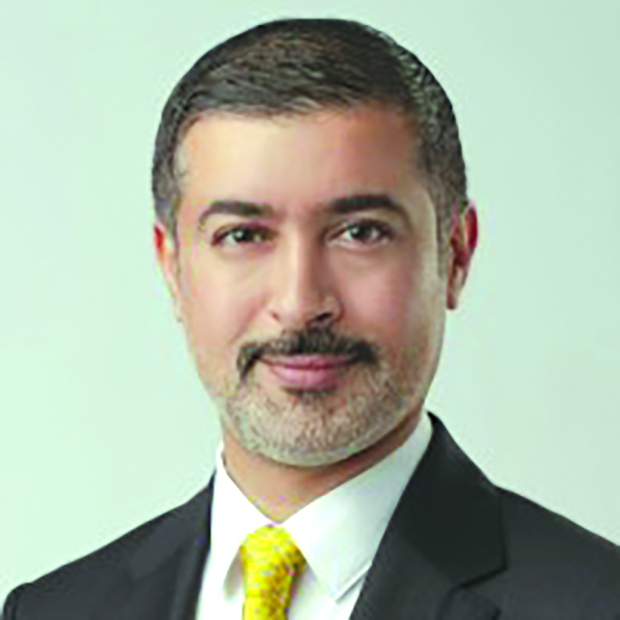
Mr Al Shehabi
He urged MPs to look closely at international models and consider modifying his proposed Bahraini law, already drafted by the government and referred to Parliament, to make it more practical, adaptable and capable of responding to emerging technologies.
Among the models he believes deserve attention is Taiwan’s Artificial Intelligence Basic Act, which establishes a national framework combining AI development with safeguards covering areas including privacy, data governance, cybersecurity, transparency, fairness and accountability.
This approach also provides for risk-based regulation, allowing greater controls to be applied to higher-risk AI applications rather than subjecting every technology and business to the same regulatory burden.
“The objective should not be to restrict artificial intelligence. It should be to regulate its risks, protect people and at the same time create an environment where innovation can grow,” Mr Al Shehabi said.
His comments come as MPs prepare to debate and vote on a proposed law regulating AI technologies and their uses during the exceptional term later this month.
The proposal, submitted by Mr Al Shehabi, Shura Council first vice-chairman Jamal Fakhro, second vice-chairwoman Dr Jihad Al Fadhel, public utilities and environment affairs committee chairman Dr Mohammed Ali Hassan and legislative and legal affairs committee chairwoman Dalal Al Zayed, seeks to regulate AI technologies and their peaceful uses in a manner consistent with public order and the public interest while protecting individual rights, security, freedoms and ethical principles.
It would also prohibit the use of dangerous robots and intelligent machines whose movements cannot be controlled.
Mr Al Shehabi said Bahrain could benefit from studying such international experiences while developing a framework suited to its own needs. “We should learn from the experiences of countries that have moved ahead of us, but the Bahraini framework must be designed for Bahrain,” he added. “We can take the best elements of international models and adapt them to our own legal, economic and social environment.”
He also believes the legislation should go beyond the limited areas of robot-assisted services, manufacturing and medical intervention.
The government has criticised the proposal for not sufficiently covering the full range of sectors in which robots and intelligent systems are being deployed, including autonomous vehicles, care and domestic robots, as well as emerging applications in legal services.
“Artificial intelligence is moving into every part of our lives. Our legislation must, therefore, be capable of moving with it, protecting society without placing unnecessary barriers in the path of innovation,” Mr Al Shehabi said.
mohammed@gdnmedia.bh
Human connection – Page 15
&uuid=(email))