

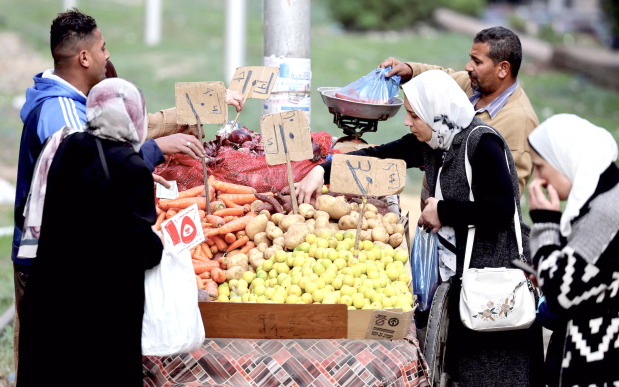
EGYPT’S annual core inflation slowed by 0.8pcage points to 14.1 per cent in September, although rising vegetable prices pushed up monthly consumer costs, highlighting persistent pressure on household budgets, reports the Arab News.
The Central Bank of Egypt reported the decline, while data released by the Central Agency for Public Mobilisation and Statistics showed annual urban headline inflation slowing to 13.9pc from 14.5pc.
Monthly urban inflation rose to 1.3pc in September from 0.1pc in August, but remained below the 1.8pc recorded in September 2025. Monthly core inflation also increased, climbing to 0.8pc from 0.3pc in August.
Despite the annual slowdown, inflation in Egypt remains substantially higher than in several Gulf economies.
The rate in Saudi Arabia held at 1.8pc in August, while Oman’s reached 3.4pc, according to official data.
S&P Global expects Egypt’s inflation to average 12.9pc in fiscal 2026/27 before easing to 9pc by fiscal 2028/29.
Ramzi Abou Abdallah, senior market analyst at Phystone Financial Advisory, told Arab News that easing annual inflation does not necessarily translate into lower consumer prices, noting that food-price volatility, particularly in vegetables, disproportionately affects lower-income households.
“For households, the distinction between slower inflation and falling prices is crucial: even when inflation eases, living costs generally continue rising,” he said.
He added that elevated global energy prices, regional uncertainty and further adjustments to administered prices could slow the pace of disinflation.
Annual inflation nationwide edged up to 12.8pc in September from 12.7pc in August, according to CAPMAS. The nationwide consumer price index rose 1.5pc month on month to 294.2 points, the agency said.
Vegetable prices surged 15.1pc during the month, while fruit prices climbed 2.6pc and meat and poultry prices increased 2.5pc, underscoring the continuing impact of food-price volatility on consumers. Food and beverage prices rose 3.2pc month on month, according to CAPMAS data. Clothing and footwear prices increased 0.8pc, while audio-visual and photographic equipment prices fell 1.1pc and organised tour prices declined 0.6pc.
&uuid=(email))