

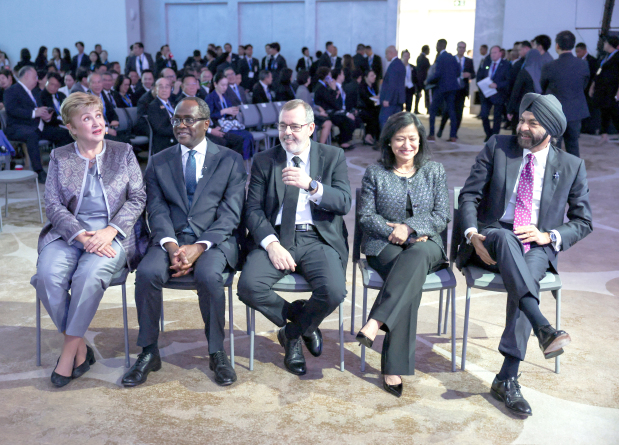
The head of the IMF yesterday appealed to global leaders to co-operate in the face of multiple economic risks, including rapid advances in AI and a prolonged war in the Middle East, as Washington hailed what it sees as US-led economic momentum.
Their contrasting views echoed throughout this year’s annual meetings of the International Monetary Fund and World Bank in Bangkok, as finance officials and central bankers from around the world took stock of a global economy rocked by high inflation and rising interest rates that have kept growth sluggish and increased inequality.
The IMF on Tuesday slightly raised its global growth forecast to 3.1 per cent in 2026, well below the historical average, as it flagged significant growth and financial stability risks from a potential ending of the AI investment boom, growing debt levels and the ongoing Middle East conflict.
Absent the US-Israeli-led war against Iran and Tehran’s closure of the Strait of Hormuz that triggered a massive global energy shock, the IMF has said it would have expected AI to have fuelled much stronger growth.
Yesterday, IMF chief Kristalina Georgieva said the sheer speed of technological change added to the long list of challenges, including disruptions to the global trading system, high food and energy prices and lingering wars, all of which threatened to widen the gulf between advanced economies and the world’s poor.
Bond markets, she said, were clearly sensing the risks, with US, German and Japanese 10-year sovereign yields reaching their highest levels in decades.
“The need of the hour is for urgent and practical international cooperation,” Georgieva, the first IMF chief from an emerging market economy, said at a plenary session yesterday. She told a subsequent panel that she spent sleepless nights worrying about how to regulate AI and ensure that poorer countries weren’t left behind by its breakneck-speed development.
US Treasury Under Secretary Erin Browne, in a call with reporters, pushed back against those warnings, hailing record highs on the US stock market, strong US economic output and improvements in Japan’s economy.
“The IMF needs to take a more balanced approach to assessing the global economic outlook,” she said, adding: “The global economy has demonstrated significant resilience with strong US growth helping to support broader economic and financial stability.”
She said that the Fund should give equal consideration to “opportunities for positive economic shocks, particularly those driven by American innovation and super intelligence, energy abundance, and productivity-enhancing reforms.”
US President Donald Trump’s policies on tax, trade, energy and deregulation were paving the way for stronger investment, higher productivity and durable economic growth, she said.
Emerging market stocks have been volatile in recent weeks, roiled by expectations of higher US interest rates that have sent borrowing costs sharply higher. Major markets have also been hit by the growing concerns over the AI investment cycle.
&uuid=(email))