

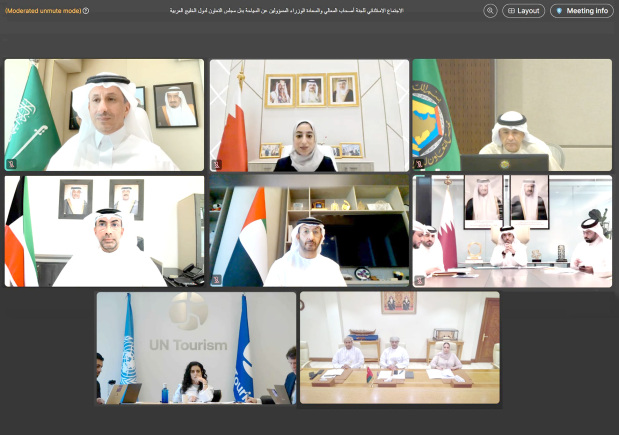
An extraordinary virtual meeting was recently held by senior officials to discuss mechanisms for supporting the growth of the tourism sector in GCC states, despite the impacts of the Iranian strikes.
Chaired by Tourism Minister Fatima Al Sairafi, the meeting brought together tourism ministers from across the region as part of Bahrain’s presidency of the GCC.
During the meeting, Ms Al Sairafi praised the solid relations and continuous co-ordination among GCC states in various fields.
The ministers discussed joint-GCC action in dealing with current developments.
“It is important to continue strengthening co-ordination and integration among GCC states in the tourism sector, and ensure its capability to confront various challenges and changes,” said Ms Al Sairafi.
“Tourism is one of the most vital sectors supporting national economies, and one of the important pathways for achieving economic diversification.
“The tourism sector in the GCC has strong foundations and robust capabilities to respond to various changes, underpinned by advanced infrastructure, accumulated expertise, and proven best practices in managing challenges. “Enhancing co-ordination and integration, activating co-operative agreements, and building on the diverse tourism assets possessed by the countries is equally as important.”
During the meeting, a number of topics were reviewed, including the impact of current developments on tourism movement in the GCC. Attendees also explored opportunities to enhance the sector’s resilience and sustainability, and discussed mechanisms to strengthen joint action to support growth in the tourism sector.
Officials discussed methods to consolidate the position of the GCC states as attractive tourist destinations at both regional and international levels.
GCC Secretary General Jassim Al Budaiwi delivered a speech in which he affirmed that experience has proven that the GCC is capable of overcoming all crises and challenges with efficiency and competence.
“This is based on the close ties and effective integration in all fields that unite them,” said Mr Al Budaiwi.
“This approach has contributed to enhancing the ability to contain challenges, maintain the stability of the states, and ensure the continuity of all vital sectors with efficiency and competence. It reflects the strength and effectiveness of joint gulf action under various circumstances.”
&uuid=(email))