

A renewed push to reclaim Bahrain’s only natural lake and replace it with hundreds of social housing units is gathering pace, as residents complain of foul smells, mosquitoes and repeated flooding.
The call is being led by area MP Abdulhakim Al Sheno and Northern Municipal Council technical committee chairman and area councillor Jassim Hejres, who say years of inaction have turned Al Luzi Lake into what residents now describe as a festering swamp.
The lake, located between Hamad Town and Hamala, was once a haven for migratory birds and wildlife. Today, large parts of it have already been reclaimed for housing, while the remaining water body struggles with stagnation after being cut off from natural sea circulation.
“There appear to be no serious efforts from authorities concerned to preserve what is left,” said Dr Al Sheno. “Instead of being a natural asset, the lake has become a source of unbearable odours, mosquito swarms and anxiety for families living nearby.”
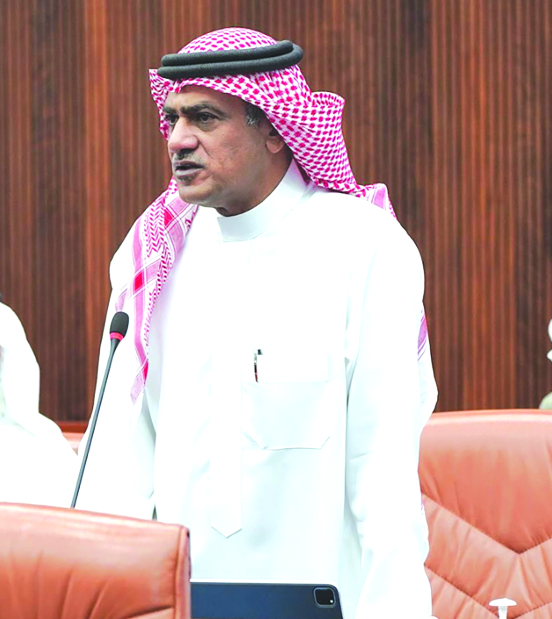
Dr Al Sheno
He pointed to repeated flooding in surrounding neighbourhoods during heavy rains, with overflow from the lake inundating drainage channels in Hamad Town and forcing authorities to pay compensation to affected residents.
“We have seen this happen time and time again. The lake has no outlet to the sea, so when it rains heavily, the water has nowhere to go,” he said. “Why should residents suffer headaches and sleepless nights when a practical solution is staring us in the face?”
An earlier environmental study presented to the council estimated that BD1.2 million would be needed to clean and rehabilitate the lake, with a further BD400,000 annually required to keep the water aerated and to prevent stagnation.
“That is a huge cost for something that continues to create problems,” Dr Al Sheno said. “With the same land, we could build hundreds of homes for families on waiting lists.”
He added that checks into official records showed no specific ministerial order listing the lake as a protected natural habitat, despite references to environmental protection laws.
“There is a law protecting Tubli Bay, but nothing naming Al Luzi. We searched records and found no document clearly stating it must be preserved as it is,” he said.
Despite Health Ministry tests showing the water is not contaminated and still contains oxygen, both men argue that the lack of circulation has made it a ‘nuisance’.
“The problem is not poison in the water,” Dr Al Sheno said. “The problem is that it is trapped.”
For residents, the debate is no longer an environmental one, campaigners claim. Petitions, calls and messages continue to pour in, demanding action to remove the water for good.
“People are asking for peace of mind,” he said. “If the lake cannot be restored into something beautiful and useful, then it should make way for homes that families desperately need.”
Mr Hejres said the original vision had been to transform the lake into an eco-tourism and recreational destination, with walkways, cafés and activities similar to Amwaj Islands, but rooted in a natural setting.
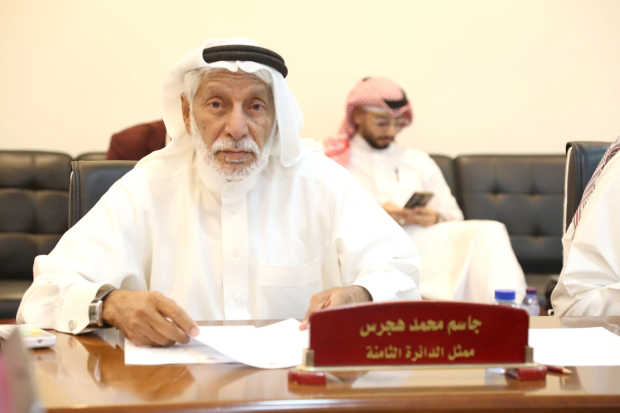
Mr Hejres
“That was the dream,” he said. “But with the smells and the condition of the water today, no investor will come near it and no family can enjoy sitting beside it.”
He said the government had previously agreed to clean and aerate the lake in 2016, but funding delays and shifting priorities meant the project never fully materialised. A boundary wall was only completed in 2019.
“Al Luzi is Bahrain’s only naturally-formed lake, but through neglect it has turned into the country’s largest swamp,” Mr Hejres suggested. “We have reached a point where keeping it, as it is, causes more harm than good.”
It could be the lake’s swansong.
mohammed@gdnmedia.bh
&uuid=(email))