

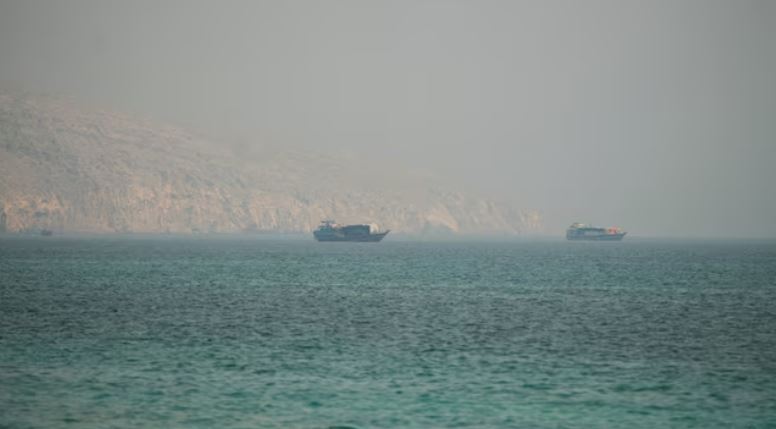
TOP-LEVEL meetings are continuing to take place to discuss arrangements for the safe passage of ships through the Strait of Hormuz, with Washington seeking a public pledge from Iran of free, secure transit.
US President Donald Trump said earlier that the US and Iran had agreed to further talks despite an escalation of hostilities last week, while also declaring an end to the ceasefire reached between the two sides.
The US administration has issued a final and decisive warning to Iran, giving Tehran 24 hours to meet strict demands related to maritime security in the Gulf, or face ‘severe consequences’.
According to prominent Israeli journalist Barak Ravid, the US ultimatum requires Iran to take two clear and immediate steps:
First, it must officially and publicly acknowledge that the Strait of Hormuz is ‘open’ and that freedom of navigation is guaranteed.
Second, it must fully commit to halting any attacks targeting ships and commercial shipping in the region.
Three Qatari and Saudi commercial tankers came under fire last week, prompting the US to hit Iranian sites, and Iran to respond with strikes at Gulf states.
The US also revoked the licence authorising the sale of Iranian crude on Tuesday after the vessels were hit.
While Iran has not claimed responsibility for the ship attacks, analysts say Tehran uses such actions to gain leverage in negotiations.
Senior US officials told reporters on Friday that Iran had informed US officials that recent attacks on shipping in the strait were from an ‘errant part of their system’, comments that appeared to be aimed at calming tensions.
The flare-up cast further doubt over the future of an interim agreement aimed at ending the conflict and pushed oil prices higher, a politically sensitive issue for Trump ahead of November congressional elections.
Iran’s Foreign Minister Abbas Araqchi arrived in Oman yesterday to hold talks on the issue after Qatari negotiators met officials in Iran on Friday to de-escalate tensions and discuss the Strait of Hormuz, a person with knowledge of the situation told Reuters.
No attacks were reported on Friday or early yesterday, however, and a senior Iranian source told Reuters a call between Iran, the US, Qatar and Pakistan had been agreed and mediators were trying to arrange it while Araqchi is in Oman.
Oman is helping to mediate an end to a war that has spread insecurity in the Gulf and raised prices around the world since the US and Israel launched air strikes on Iran on February 28.
CBS News and its UK partner the BBC both reported that US Vice President JD Vance, Secretary of State Marco Rubio, special envoy Steve Witkoff and Trump’s son-in-law Jared Kushner were expected to lead negotiations with Araqchi.
The talks are taking place amid a war of words. The Wall Street Journal and other US media reported that Israel had shared intelligence with Washington that Iran had recently devised a plan to assassinate Trump.
Trump had posted on Friday that he had ordered the US military to be prepared to launch thousands of missiles against Iran if Tehran made such an attempt.
&uuid=(email))