

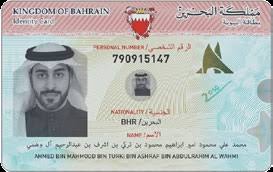
Expatriates in Bahrain could soon pay double for their smart identity cards under a proposal aimed at boosting government revenues while tightening oversight of residency and identity records.
Municipal councillors have submitted a proposal to increase the fee for issuing and renewing expatriate smart cards every five years from BD10 to BD20.
The plan has been referred to Parliament Speaker Ahmed Al Musallam, who will forward it to the relevant parliamentary committee for further study.
The proposal, spearheaded by Southern Municipal Council chairman Abdulla Abdullatif, also seeks tougher penalties for repeatedly losing or damaging identity cards.
Under the proposal, Bahrainis would continue paying BD2 for first-time issuance and renewal, while the replacement fee for a lost or damaged card would be reduced from BD4 to BD3 for the first incident within the five-year validity period. However, if a Bahraini loses or damages the card a second time during the same period, the replacement fee would increase to BD20.
For expatriates, the cost of issuing or renewing a smart card would rise from BD10 to BD20, while the replacement fee for a lost or damaged card possibly doubled to BD40 with that left undetermined.
“The proposal is intended to enhance government revenues while encouraging people to safeguard official identity documents,” Mr Abdullatif said. “Smart cards are essential legal documents and should be kept securely at all times. Repeated loss or damage results in additional administrative costs and unnecessary burdens on government services.”

Mr Abdullatif
The move follows earlier disclosures by Information and eGovernment Authority (iGA) officials that producing each smart card costs the government around BD14, while expatriates currently pay only BD10 for issuance or renewal.
The proposal has received backing from Parliament’s second deputy speaker Ahmed Qarata, who believes that the current pricing structure does not reflect the government’s actual costs.
“The ID card costs the state BD14 but is issued to foreigners for only BD10,” Mr Qarata said.
He stressed that the draft law was designed to strengthen oversight of foreign workers, reduce violations and increase public revenues, but warned that several legal and operational issues still required clarification before the legislation could move forward.

Mr Qarata
He also highlighted an earlier proposal showcasing the need to link expatriates’ identity cards directly to their residency status, pointing out that while smart cards are valid for five years, residency permits often have different validity periods.
“There must be clear co-ordination between residency permits and identity cards,” he said. “Procedures should also be aligned with those governing driver’s licences to eliminate loopholes and ensure fair and consistent enforcement.”
He added that unlike Bahrainis, expatriates do not currently face suspension of their identity cards in certain violation cases, saying this issue should be addressed to prevent possible exploitation of the system.
Government-issued smart cards are also available digitally through electronic wallet services without changing the current fee structure.
The proposal will now undergo detailed parliamentary scrutiny before any recommendation is made to the government.
“If approved, it would represent one of the most significant revisions to expatriate identity card fees in recent years while complementing Parliament’s wider efforts to strengthen the link between residency permits and national identity records,” said Mr Qarata.
The new smart cards with latest features were rolled out in March last year as part of an upgrade to Bahrain’s national identity system.
mohammed@gdnmedia.bh
&uuid=(email))