

Saudi Arabia was the region's largest dividend payer, distributing an estimated $24.5 billion during the first quarter and accounting for almost 84% of all Middle East dividends, according to a new report.
Inaugural Global Dividend and Buyback Index from Janus Henderson highlights that Saudi Aramco remained the single largest dividend payer in the global index, underlining the Kingdom's importance in global shareholder returns.
Global dividends rose to $424.5 billion in the first quarter of 2026, up 10.1% year-on-year, according to report. Dividend growth was broad-based, with meaningful increases across North America, Europe, Japan and the UK, despite a noisy macroeconomic backdrop.
The report said the Middle East distributed $29.2 billion in dividends during the quarter, with underlying payouts rising 4.0% year-on-year.
The new index expands Janus Henderson’s long-running dividend research to include share buybacks, providing a more complete picture of how the world’s largest companies return capital to shareholders. It also introduces dedicated analysis of Middle East markets. In Q1, global buybacks reached $425.7 billion, marginally ahead of dividend payments, but fell 3.1% from the same period the previous year, suggesting companies are becoming more selective in their approach to shareholder returns.
Dividends prove resilient as buybacks soften
The first quarter showed a divergence between dividends and buybacks. Dividend payments accelerated, supported by resilient corporate earnings, while buybacks softened against a backdrop of higher-for-longer interest rates, trade uncertainty, and geopolitical risk.
North America continued to dominate global shareholder returns. The US contributed $183.5 billion in dividends, accounting for 46.3% of the index total, and repurchased $266.7 billion of shares, making it by far the largest market globally for both dividends and buybacks. US dividend growth was broad-based across sectors, with technology, financials, and energy among the key contributors.
Europe excluding the UK paid $67.4 billion in dividends in Q1, up 35.5% year-on-year, boosted by currency and timing effects. Switzerland was the continent’s largest payer, distributing $27.3bn, followed by Denmark at $9.4 billion.
Middle East dividend growth reflects underlying resilience
The Middle East distributed $29.2 billion in dividends during the first quarter, with underlying dividend growth of 4.0% year-on-year. Headline dividends were 5.0% lower, primarily because of calendar effects rather than weaker corporate distributions.
Saudi Arabia was the region's largest dividend payer, distributing an estimated $24.5bn and accounting for almost 84% of Middle East dividends.
Qatar ranked second, distributing $2.0 billion in dividends. The UAE paid $1.7 billion in dividends during the quarter. While headline UAE payouts were lower than a year earlier, this was due to the timing of Dubai Islamic Bank's dividend payment rather than weaker underlying dividend activity.
Financials lead payouts
Financials remained the largest contributor to global dividends in Q1, distributing $90.8 billion. The sector also led global buybacks, with $110.7 billion of repurchases, accounting for more than a third of the index total.
Basic materials saw the strongest dividend growth of any industry, with payouts rising 47.1% over the period surveyed. This was driven by elevated demand for critical minerals such as copper and lithium, which are important inputs for data centres, semiconductors and AI infrastructure.
Technology also remained central to the shareholder return story. The sector distributed $43.7 billion in dividends and carried out $66.6 billion of buybacks in Q1, underlining the continued importance of major technology companies to global capital returns.
Outlook upgraded for dividends
Janus Henderson forecasts global dividend growth of 8.3% in 2026, up from 6.8% in 2025. By contrast, global buybacks are expected to decline 1.1% this year, after rising 6.1% in 2025.
The outlook for dividends remains supported by resilient earnings, although Janus Henderson notes that higher-for-longer interest rates, geopolitical risk, and pressure on consumer-facing sectors remain important risks. Buybacks are expected to remain more cyclical, providing companies with flexibility if conditions deteriorate.
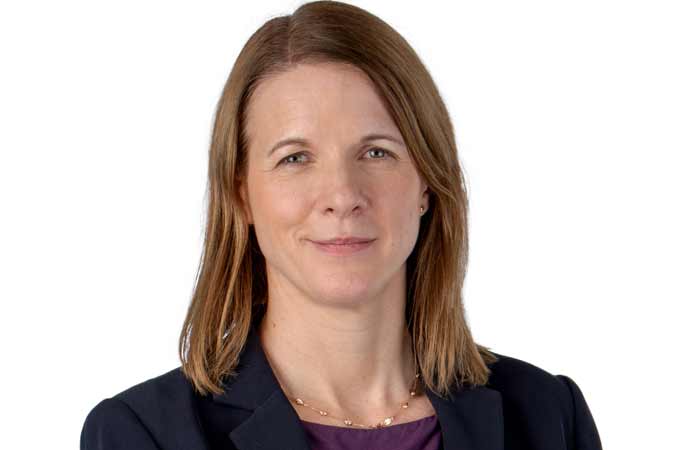
Jane Shoemake, Client Portfolio Manager on the Global Equity Income Team at Janus Henderson, said: “Amidst what feels like an increasingly uncertain macro backdrop, the surprise has been the strength of earnings around the world. Those earnings almost always result in higher dividends, and that’s exactly what we’re now seeing across a range of industries and regions.
“Buybacks add another layer to the story. The absolute level of repurchases remains substantial, broadly in line with dividends in Q1, but the modest year-on-year decline also shows why they should be treated differently. Dividends are generally long-term board decisions based on sustainability, while buybacks are more discretionary and cyclical in nature. In that sense, dividends remain the stronger signal of confidence, while buybacks act as a more flexible shock absorber.” - TradeArabia News Service
&uuid=(email))