

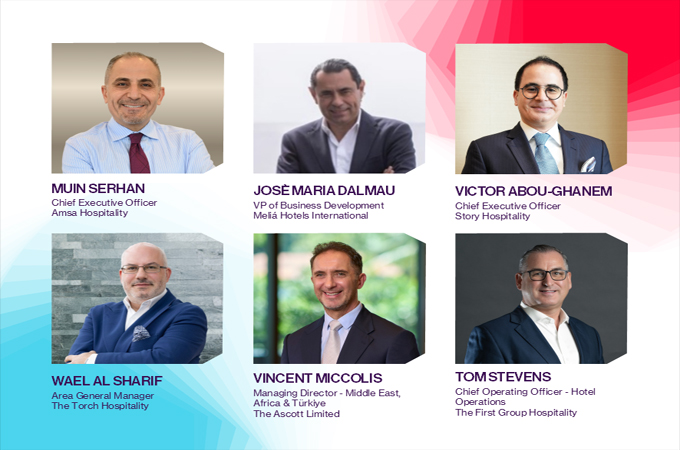
Technology and innovation are emerging as defining themes at the Future Hospitality Summit (FHS), as industry leaders assess how artificial intelligence (AI), automation and data analytics are transforming hospitality investment, operations and guest experiences.
Ahead of FHS World in Dubai in September, hospitality
executives from across the sector highlighted a shared focus on investing in
technologies that improve decision-making, operational efficiency, guest
satisfaction and long-term asset value.
At the same time, sustainability is becoming a central
investment priority, driven by regulatory requirements and evolving traveller
expectations.
Tom Stevens, Chief Operating Officer - Hotel Operations, The
First Group Hospitality, said: “We prioritise investments that deliver
measurable ROI. AI-driven revenue optimisation, sales analytics, and
intelligent guest engagement improve commercial precision and efficiency. In
high-growth markets like Saudi Arabia, disciplined capital allocation and
empowered teams are equally critical.”
Leaders also stressed the importance of cybersecurity, data
protection and maintaining guest trust as technology adoption accelerates.
Vincent Miccolis, Managing Director - Middle East, Africa
and Türkiye, The Ascott Limited, commented: “We also place strong emphasis on
cybersecurity and data protection, given the increasing importance of
safeguarding guest data and maintaining trust. AI and guest-facing technologies
remain important but are always applied with a clear focus on improving
performance rather than technology for its own sake.”
Technology investment is also reshaping guest engagement
strategies, with operators placing greater emphasis on direct relationships
through digital platforms, customer relationship management and loyalty
programmes. Victor Abou-Ghanem, CEO, Story Hospitality, said, “We continue to
strengthen direct distribution: better websites, CRM, and loyalty will also be
key for us in 2026. In a world of AI agents and high OTA commissions, direct
relationships with our guests have become more strategic.”
AI is already delivering measurable value across revenue
management, forecasting, distribution, operational planning and
personalisation.
José Maria Dalmau, VP of Business Development, Meliá Hotels
International, said: “Revenue management systems enable smarter pricing models,
better demand forecasting and segmentation precision. Distribution efficiency
improves channel mix and reduce acquisition cost. AI also supports operational
optimisation through predictive maintenance and workforce planning. But
importantly, AI supports personalisation, which increases guest satisfaction
and repeat behaviour. For us, the measurable value is not only in margin
improvement, but in lifetime guest value.”
Executives agreed that technology-enabled hotels are
increasingly viewed as stronger investment assets, offering improved
efficiency, adaptability and resilience.
Wael Al Sharif, CEO, Story Hospitality, said: “Both.
Tech-enabled properties command valuation premiums through superior operational
efficiency and guest satisfaction metrics. Simultaneously, they carry lower
risk premiums due to adaptability, data-driven decision-making, and reduced
labour dependency. Investors increasingly view technology infrastructure as
fundamental asset quality determinant, similar to location or brand
affiliation. Non-tech properties face growing valuation discounts.”
However, leaders cautioned that technology alone does not
guarantee returns. Miccolis noted: “The key is not the presence of technology,
but how effectively it is applied to drive returns and long-term asset value.”
Looking towards 2030, executives highlighted the importance
of combining advanced technology with human-led service, sustainability and
operational discipline.
Stevens said: “A future-ready hospitality business will
combine technology-driven precision, empowered local talent, and disciplined
capital allocation to consistently deliver guest value and sustainable owner
returns.”
Victor Abou-Ghanem concluded that “A truly future-ready
hospitality business in 2030 will be one that blends a strong human service
culture with data, AI and sustainable operations, so that every stay feels
personal, every decision is informed, and the impact on people and the planet
is genuinely positive.”
The discussions underline that hospitality’s future advantage will come from integrating intelligent technology with human experience, trust, sustainability and adaptability. -TTN
&uuid=(email))