

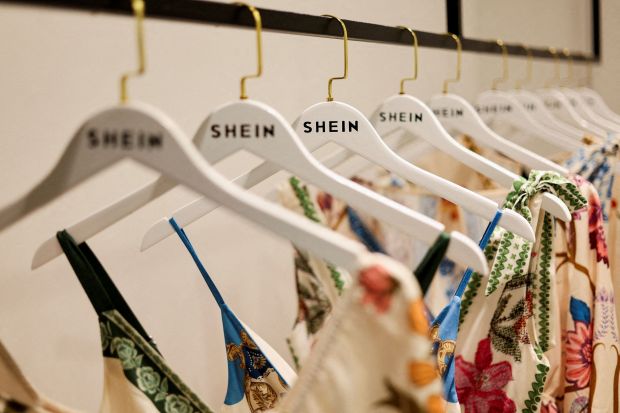
Shein is finally going public, but in a far more hostile world than when the Chinese online retail giant’s IPO journey began five years ago.
The company has worked hard to address environmental, social and governance (ESG) concerns that have triggered regulatory investigations and fines in several countries, complicating previous attempts to list its shares. Many of those challenges remain and could weigh on its valuation after its stock market debut in Hong Kong next month.
Efforts to list in New York and London drew criticism from politicians and investors over its environmental impact, labour standards and governance, and active regulatory investigations continue to cast a shadow over the Hong Kong flotation.
Shein is under investigation by the European Commission and the US Federal Trade Commission. Previous probes resulted in fines in France over alleged fake discounts and in Italy over greenwashing as fast fashion comes under increased scrutiny from regulators.
The company has responded by improving disclosure of its sustainability initiatives, hiring consultants and setting up an external ESG advisory board in 2024. Its annual ESG report grew to 118 pages last year, up from 28 pages in 2021.
Despite the push to improve its public image, several European and Asian investors said they remain concerned about labour conditions, governance structure, regulatory scrutiny and efforts to reduce carbon emissions.
“The company continues to face serious ESG controversies, particularly around working conditions and labour rights in its supply chain, supply chain traceability, environmental impacts and the broader sustainability implications of its high-volume, ultra-fast-fashion business model,” said Janina Bartkewitz, ESG analyst at Union Investment in Frankfurt, which managed €569 billion ($664bn) of investment at the end of June.
A Shein spokesperson said: “Shein is committed to maintaining high standards of corporate governance, transparency and accountability. We operate in compliance with applicable laws, regulations and listing requirements, and continue to review and strengthen our governance practices as the business evolves.”
Shein’s 2025 sustainability report pointed to improvements in its supply chain, with 53 per cent of its suppliers receiving the top grades in audits, up from 47pc in 2024.
The European and US investigations, however, raise the risk of large fines. The European Commission recently fined Alibaba-owned AliExpress €550 million and PDD-owned Temu €200m over illegal products.
Beyond any financial impact, however, the level of regulatory scrutiny raises questions about compliance, internal controls and board oversight, Bartkewitz said.
Some investors also flagged governance issues as concerns grow over the influence wielded by founders of some of the world’s largest companies.
Shein’s dual-class share structure gives class A shares 10 votes each and class B a single vote. As a result, the company’s four co-founders will hold 59.6pc of overall shares but have 90pc of the voting rights after the IPO, Monday’s stock market filing showed.
This gives the co-founders significant influence over shareholder decisions, and without a fixed expiry, said Kiran Aziz, head of responsible investments at Norway’s KLP pension fund, which manages more than €80bn.
Shein also combines the roles of chief executive and chairman. All four co-founders sit on the board while holding executive positions, and only three of the seven directors are independent.
&uuid=(email))