

Global stocks fell yesterday as a surge in oil prices and rising government bond yields weighed on risk appetite ahead of central bank meetings in the United States and Japan this week.
On Wall Street, technology and industrial stocks led declines across the three major indexes.
Artificial intelligence-related shares also came under pressure after the leaders of OpenAI and Anthropic called for a slowdown in AI development to manage risks and protect humanity.
The Dow Jones Industrial Average fell 0.48 per cent, the S&P 500 fell 0.78pc and the Nasdaq Composite fell 1.09pc.
The Philadelphia chip index dropped 5pc.
In Europe, the STOXX 600 was down 0.34pc as gains in oil and gas stocks were offset by losses in tech, which were swept lower after the concerns expressed in a letter by Anthropic CEO Dario Amodei, echoed by Elon Musk, who runs xAI, and Sam Altman, CEO of OpenAI.
MSCI’s gauge of stocks across the globe fell 0.89pc. Its index of Asia-Pacific shares outside Japan lost 0.73pc.
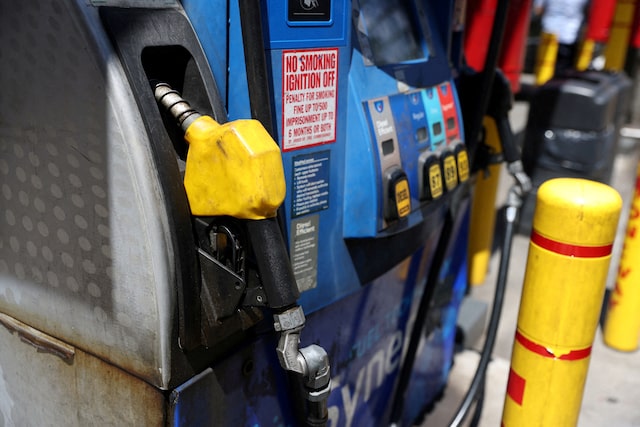
Brent futures were last up 4pc at $108.83 a barrel, having gained almost 9pc last week. Prices for diesel, petrol and jet fuel are all far higher than they were before the Iran war, meaning a direct hit for consumers.
Saudi Arabia’s East-West Pipeline was temporarily shut following a drone attack, according to Saudi officials. The shutdown of the pipeline, which helps Saudi Arabia avoid the Strait of Hormuz by re-routing oil to the Red Sea, threatens up to 4pc of global oil supply.
“There’s been no real equity-market drama in the face of 5pc yields and high oil prices. But, clearly, one thing we have to add to the mix is that if the disruption in Hormuz continues, we’re going to have to add a couple of hikes by central banks, which is what the market is pricing,” Lombard Odier chief economist Samy Chaar said.
Government bond yields edged higher after posting their worst weekly performance since mid-May last week.
Benchmark 10-year US Treasury yields touched 5pc for the first time since 2023, while Germany’s 10-year bond yield climbed above 3.54pc, its highest level since 2009.
Traders now attach a 90pc probability of the Federal Reserve raising rates on Wednesday, in what could be its first hike since mid-2023. The European Central Bank raised rates last week and indicated more may follow if inflation picks up.
Markets also imply about a 76pc chance that the Bank of Japan will raise its policy rate by 25 basis points to 1.25pc at Friday’s meeting.
The BOJ is also expected to signal the possibility of further tightening as it seeks to support the yen following intervention that helped pull the currency away from a 40-year low.
“The Fed is more impatient than it was, and central banks are more impatient than they were, the ECB included. They’re not just going to let time do its work. They want to get ahead of it,” Chaar said.
In currency markets, the dollar rose against major peers including the euro, yen and Swiss franc. It rose 0.79pc to 154.76 against the yen and was up 0.2pc to 0.818 against the Swiss franc.
The euro was 0.52pc lower at $1.1538.
Gold prices fell as the US dollar rose. Spot gold fell 1.78pc to $4,270.29 an ounce.
&uuid=(email))