

Advances in oncoplastic breast surgery are offering new hope to breast cancer patients, with a range of techniques giving women more choices in treatment and reconstruction, thereby boosting their confidence, medics have said.
The developments come into focus during Breast Cancer Awareness Month in October, an annual international campaign aimed at raising awareness of the disease, encouraging early detection and supporting research.
Oncoplastic surgery involves removing the tumour and a margin of healthy tissue while preserving or restoring the natural shape, contour and symmetry of the breast.
Bahraini consultant plastic and reconstructive surgeon Dr Ayman Saeed said advances in both cancer surgery and breast reconstruction mean patients now have a number of options depending on their individual needs.

Dr Ayman Saeed
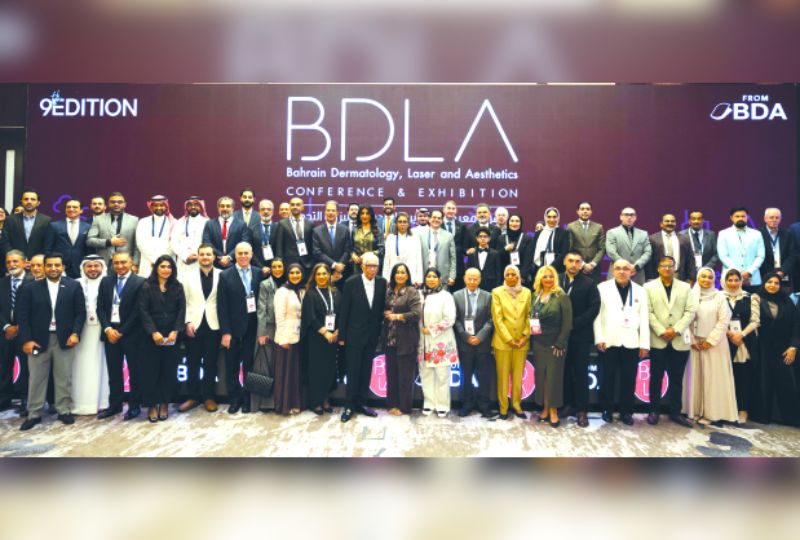
“Every patient should have the choice to be able to have a form of breast reconstruction,” he told the GDN on the sidelines of the ninth edition of the Bahrain Dermatology, Laser and Aesthetics Conference and Exhibition which opened yesterday at the Diplomat Radisson Blu Hotel, Residence and Spa in Manama.
“If a mastectomy (surgical removal of all or part of breast tissue) is needed, we have some excellent results with implants, but also with other forms using their own flaps, which is skin and fat from the body, or even reconstructing it with fat grafting and other techniques,” he added.
Dr Saeed said one in eight women are at risk of developing breast cancer during their lifetime, a disease in which abnormal breast cells grow out of control and form tumours. Alongside greater awareness, early detection can save lives, while specialist treatment and appropriate post-treatment care are also key to improving outcomes.
Bahrain currently has the highest breast cancer rate in the Gulf, with an estimated incidence of 117 cases per 100,000 women and an age-standardised rate of 58.5 per 100,000 – higher than all other GCC countries.
Dr Saeed, who trained in the UK and specialises in both breast reconstruction and oncology, noted that a growing number of breast cancer patients there are now consulting general and plastic surgeons at the same time to discuss the best way forward. “There is a great push for this,” he remarked.
Reconstructive procedures are also becoming increasingly common in Bahrain, according to Dr Ashraf El Shayeb, assistant professor of surgery at Arabian Gulf University.
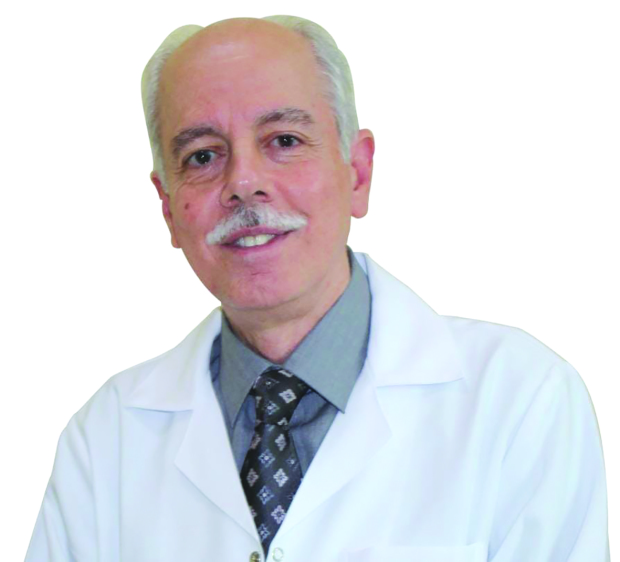
Dr Ashraf El Shayeb
“The most common procedure now is breast reconstruction using implants, which is around 75 per cent of the cases as it’s simpler than the other techniques. We put implants to reconstruct the removed breast. Usually the size is asymmetrical, so we do reduction in the other side to make it almost the same size,” explained the plastic and hand surgeon, who has more than 30 years of experience.
Other reconstruction techniques include the use of muscle flaps as well as micro-surgery, although the latter is rare, according to Dr El Shayeb, who previously worked at the Bahrain Oncology Centre in King Hamad University Hospital.
Dr El Shayeb said some breast cancer patients were hesitant to opt for implants over fears that they could make subsequent cancer detection more difficult.
“It is completely wrong,” he explained. “It will not mask because we put it under the breast. But the breast is more prominent and if you do mammogram, it can be easily detected.”
melissa@gdnmedia.bh
&uuid=(email))