

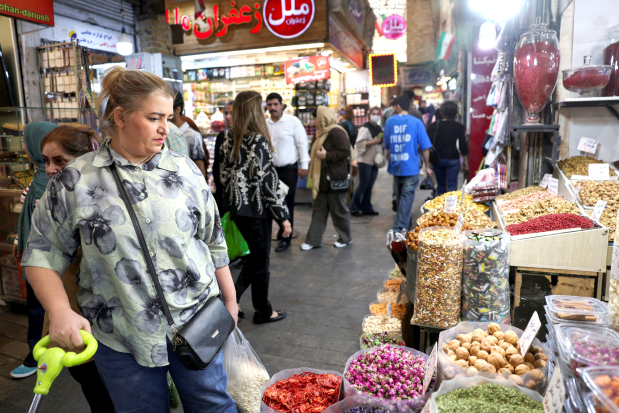
Iranian families are cutting back on food, housing and education as the eight-month-old war with the United States fuels one of the country’s worst inflation surges in decades, eroding incomes and pushing households to the brink.
The strain is being felt far beyond the country’s major cities. Workers say wages no longer cover basic expenses, while businesses face rising costs and weakening demand as families spend most of their budgets on food, rent and other necessities.
The conflict, triggered by US and Israeli strikes on Iran on February 28 and followed by Tehran’s closure of the Strait of Hormuz and a US blockade of Iranian ports in the Gulf, has disrupted oil exports, trade and government revenues.
The turmoil has compounded the impact of decades of sanctions and economic mismanagement.
Reuters spoke to more than two dozen people across Iran from different social and economic backgrounds who said worsening conditions had left them struggling to afford food, housing, healthcare and education.
“We have no money, no future and no hope. We’re tired of living in fear, fear of another US attack and fear of not being able to make ends meet at the end of every month,” said Mohammadali, a 47-year-old shopkeeper and father of two in the northeastern city of Mashhad.
Iran’s inflation surge has shown little sign of easing.
Consumer prices in September were nearly 90 per cent higher than a year earlier, while annual inflation accelerated to 73.6pc, according to official data and figures reported by state media.
Food prices have risen even faster.
The cost of food and beverages was 121.8pc higher than a year ago, forcing many families to cut spending elsewhere.
For Mahmoud, a 44-year-old government employee in the central city of Isfahan, the gap between wages and living costs widens every month.
“With my salary of less than $100, you can survive only for 10 days ... My wife and I lie to our daughters all the time when they ask for a toy or new clothes,” he said.
As wages fail to keep pace with inflation, many families have exhausted savings, cut consumption or borrowed money to cover daily expenses.
For many Iranians, the challenge is no longer preserving their standard of living but avoiding financial collapse.
“We had to move to my parents’ house last month because my husband got laid off from a small tile factory in May. We spent all our savings. But my husband is still jobless and we could no longer afford rent,” said Hamideh, a 39-year-old mother of two in the northern city of Rasht.
