

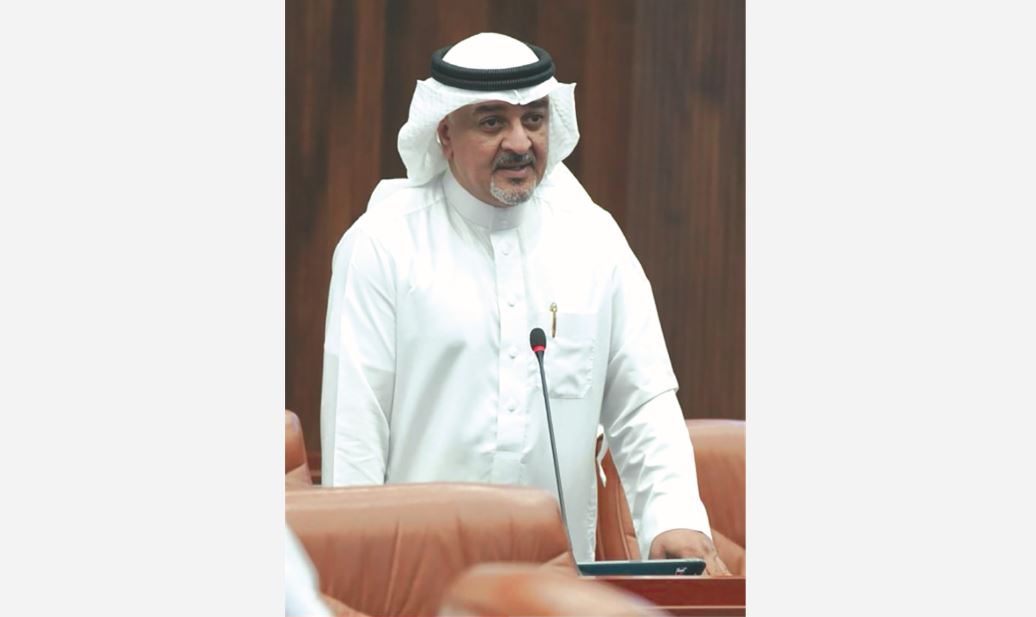
The proposal, spearheaded by MP Jalal Kadhem Al Mahfoodh, amends Decree-Law No 10 of 1976 by adding a new article requiring that housing finance provided through Eskan Bank be linked to the applicant’s monthly income, based on a financing schedule prepared by the ministry, with a maximum cap of BD120,000.
Currently, eligible citizens receive between BD57,000 and BD91,000 under existing schemes.
“Today, the reality of the property market no longer matches the current financing limits,” Mr Al Mahfoodh said. “Families are forced to seek additional loans from commercial banks to complete their homes, placing them under long-term financial strain.”
He stressed that residential units on the market now range between BD120,000 and BD160,000, far exceeding current financing capabilities.
“This proposal ensures that housing finance is realistic, fair and aligned with market prices, while reducing the debt burden on the head of household. Housing is not a luxury - it is the foundation of social and economic stability.”
Mr Al Mahfoodh noted that more than 48,000 housing applications are currently pending, reflecting the scale of demand and the pressure on families trying to secure suitable homes.
He warned that many households are resorting to multiple supplementary loans, sometimes involving spouses as co-borrowers, creating financial and social pressures within families.
“The state must take full responsibility for managing housing finance by supporting Eskan Bank to provide one comprehensive loan that truly meets the needs of Bahraini families,” he said.
He added that many regulations governing housing finance date back to the 1980s, questioning the logic of maintaining an BD80,000 cap for more than 35 years despite dramatic changes in the real estate market.
The legislative and legal affairs committee confirmed the draft is constitutionally sound, while the financial and economic affairs committee said the amendment could reduce beneficiaries’ reliance on commercial borrowing, suggesting Eskan Bank work with Bahrain’s financial sector to develop suitable solutions.
However, Housing and Urban Planning Minister Amna Al Romaihi expressed reservations in a preliminary response.
She argued that the proposal’s objective may already be achievable under Law No (1) of 2024, which grants the housing minister broader authority to introduce or amend financing services through ministerial decisions.
Ms Al Romaihi pointed to existing schemes introduced under Ministerial Decision No (868) of 2022, including Tas’heel and the New Mazaya Category, where financing limits have already been raised as part of ongoing support.
She cautioned that fixing financing ceilings in law could create additional strain on the allocated budget, potentially reduce the number of beneficiaries and lead to longer waiting lists.
“Service criteria are reviewed periodically through continuous studies to ensure flexibility in responding to market changes,” she said.
Despite the reservations, Mr Al Mahfoodh insisted that legislative clarity was essential.
“Citizens need legal guarantees that financing will keep pace with real estate values. This amendment provides that assurance.”
The proposal has now been referred to the Cabinet to be drafted into formal legislation.
&uuid=(email))