

Oil prices jumped sharply at the start of Asian trading on Monday after the United States launched a second consecutive night of strikes on Iranian military targets and Tehran retaliated with fresh attacks, heightening fears of disruption to crude shipments through the Strait of Hormuz, the world's most important oil transit chokepoint.
Brent crude, the international benchmark, climbed about 4 per cent to around $79 a barrel, while US benchmark West Texas Intermediate (WTI) rose nearly 4 per cent to about $74.3 a barrel as investors priced in the growing risk to global energy supplies.
The latest market rally followed another round of US strikes on dozens of Iranian military targets, with Washington saying the attacks were in response to continued Iranian aggression. Iranian state media said its forces had retaliated by striking US military facilities in the Gulf, while the Islamic Revolutionary Guard Corps (IRGC) claimed responsibility for attacks on American bases in Kuwait.
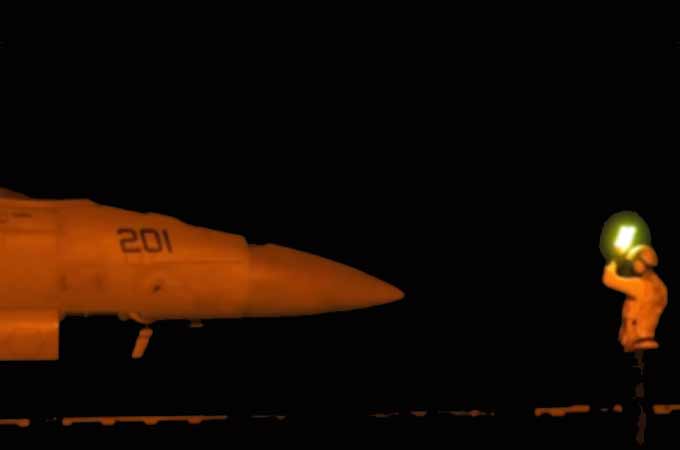
US Central Command (CENTCOM) said it completed a new wave of offensive strikes against Iran on July 12, hitting dozens of targets at multiple locations with precision munitions to degrade Iran’s ability to continue attacking international shipping flowing through the Strait of Hormuz.
CENTCOM forces struck Iranian military air-defence systems, coastal radar sites, missile and drone capabilities, and small boats using US fighter aircraft, naval vessels, one-way attack aerial drones, and one-way attack sea drones for the first time, it said.
"The Strait of Hormuz is a vital maritime corridor for global trade. Iran does not control it," it asserted.
US. forces are postured and prepared to ensure that freedom of navigation remains available to commercial shipping despite Iran’s continued unwarranted aggression, harassment, threats, and arbitrary declarations, it added.
Washington and Tehran have issued conflicting accounts of the security situation in the strait, underscoring growing uncertainty for global shipping. Iran has also warned vessels against using alternative routes along the Omani coastline, although maritime authorities have said the southern Omani route remains open.
The Strait of Hormuz remains Tehran's most powerful strategic lever in its confrontation with the United States, and any disruption to traffic through the narrow passage could have significant consequences for global energy markets.
The latest exchange marked a widening of the conflict beyond direct US-Iran military engagements. Iran said it had also targeted US military facilities in Qatar and the United Arab Emirates, while Gulf states reported missile and drone attacks over the weekend, further raising concerns about regional security and the safety of commercial shipping.
Despite the sharp rise in oil prices, analysts said markets have stopped short of pricing in a prolonged supply shock. Brent crude remains well below the highs above $115 a barrel seen earlier this year, with traders taking some comfort from repeated assurances by US President Donald Trump that Washington wants to keep the Strait of Hormuz open and avoid any disruption that could trigger a broader global economic crisis.
Meanwhile, Iran's foreign ministry accused the United States of undermining talks held in Oman on arrangements for managing transit through the Strait of Hormuz, saying American pressure had prevented any breakthrough.
Iran's top negotiator, Mohammad Baqer Qalibaf, also struck a defiant tone, declaring on social media that "the era of one-sided deals is over."
&uuid=(email))