

US government bond yields eased slightly yesterday, though longer-dated yields remained near multi-year highs after the 30-year Treasury yield earlier touched a level not seen since 2007.
The move came as fears of an escalating Middle East conflict stoked inflation worries and weighed on stocks.
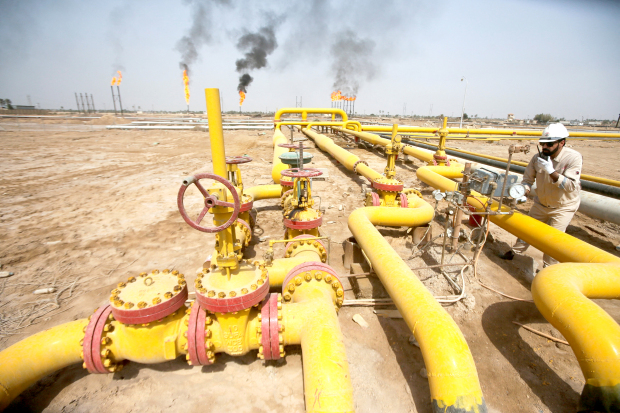
Oil prices were in positive territory for the third consecutive day, with Brent crude hitting its highest since late last month after the latest signals from Washington and Tehran crushed hopes of an imminent end to the conflict.
US crude rose 0.3 per cent to $84.75 a barrel and Brent fell to $90.79 per barrel, down 0.09pc on the day.
Yields have risen despite a recent run of soft US economic data easing concerns about an imminent Federal Reserve rate hike.
Traders now see just a 31pc chance of a hike at the Fed’s September meeting, but see 68pc odds of an increase by December.
A resurgence in inflation could renew expectations for a faster pace of rate hikes.
“If things unravel and the conflict escalates, a mid-cycle adjustment would be necessary,” said George Bory, chief investment strategist for fixed income at Allspring Global Investments.
The costs of the ongoing Iran conflict are also adding to fears over the US fiscal trajectory.
The yield on the US 30-year Treasury bond was last down 1.57 basis points at 5.2943pc after reaching 5.3371pc, the highest since 2007.
Benchmark 10-year note yields fell 1.2 basis points to 4.712pc and got to 4.7478pc, the highest since January 2025.
The rise in US yields coincided with Japanese government bond yields climbing to 30-year highs, raising concerns among analysts that as Japanese yields become more attractive, domestic investors – particularly pension funds and insurance companies – could begin shifting capital out of US debt and into Japanese bonds. Such a shift would add further upward pressure on Treasury yields.
Japan’s 10-year bond yield was hovering just below the 3pc threshold for the first time since the mid-1990s, while euro zone bond yields also sat near multi-year highs.
Wall Street’s major indexes slid to roughly two-week lows yesterday, dragged down by losses in heavyweight technology stocks that are especially sensitive to moves in Treasury yields.
“The yields are troubling people because it portends a tighter environment and it’s going to be more expensive to borrow money,” said Kim Forrest, chief investment officer at Bokeh Capital Partners. “Especially in this whole AI thing where time to pay it back is uncertain. It makes for a nervous investor environment.”
Elevated yields tend to weigh on equities by making stocks relatively less attractive to investors, and by raising borrowing costs for capital-intensive companies pouring money into AI infrastructure.
The Nasdaq Composite fell 1.06pc, the Dow Jones Industrial Average dipped 0.12pc and the S&P 500 was down 0.49pc.
The pan-European STOXX 600 index fell 0.43pc and MSCI’s gauge of stocks across the globe fell 0.55pc.
The CBOE Volatility Index, Wall Street’s fear gauge, hit its highest in more than a week.
Investors are now turning their attention to Wednesday’s release of the Fed’s latest policy meeting minutes, as well as next week’s Jackson Hole symposium, which will be closely watched for clues on how policymakers are interpreting recent economic data.
“Given the reduced information content of the FOMC’s policy statement and Fed chair (Kevin) Warsh’s press conferences, the minutes from the FOMC meetings arguably have become more important in conveying the balance of views among policymakers,” said Jonas Goltermann, chief markets economist at Capital Economics.
The Federal Open Market Committee is the Fed’s interest-rate-setting body.
In currencies, the dollar index, which measures the greenback against a basket of currencies including the yen and the euro, rose 0.02pc to 99.56, with the euro up 0.04pc at $1.1584.
Spot gold fell 0.49pc to $4,393.61 an ounce.
&uuid=(email))