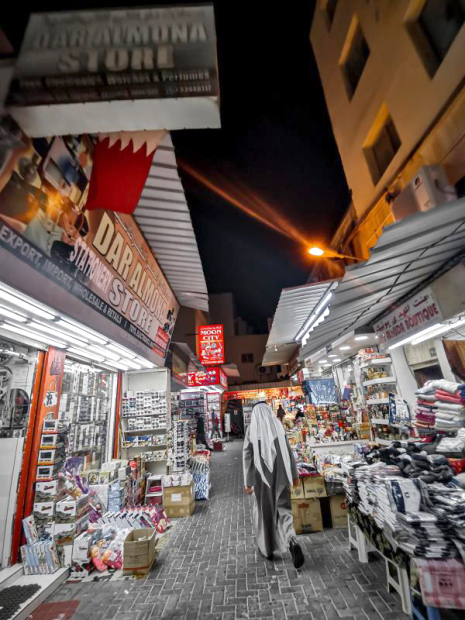
A proposal to impose strict opening and closing hours on shops across Bahrain has hit a major roadblock, with the Capital Trustees Board firmly opposing the move and warning against interference in business operations.
The board has effectively put the brakes on the initiative approved by the Southern Municipal Council, which sought to require commercial outlets to open no earlier than 5am and close by midnight unless granted a special 24-hour licence.
The council had cited complaints from residents about noise and disturbances in neighbourhoods.
Since all municipal bodies must agree before the proposal can advance, a single rejection is enough to stall it – and the Capital Trustees Board has made its position clear.
Board chairman Saleh Tarradah argued that business owners, not regulators, should decide when their doors open and close.
“Business owners should decide what is best for their business – whether opening at midnight, during the day or at any other time,” he said.
Mr Tarradah questioned the logic of linking shop operating hours to residents’ complaints.
“Of all the concerns about vehicle horns, closing at 10pm or midnight is not the issue,” he said. “Shop workers are not the ones using their horns. This is a behavioural problem, not a business-hours issue. Is it acceptable to honk at 10pm? No.”
He also pointed to the practical needs of residents. “Some people work shifts and rely on services such as laundries or dry cleaners for their work attire, whether to drop off or collect items,” he said. “This proposal overlooks the bigger picture.”
Mr Tarradah further pointed to the economic importance of extended operating hours, particularly for cafés and restaurants.
“Most cafés are quiet and respectful, and now we are in the middle of the World Cup finals period, which is prime time for business,” he said.
“There is no logic in enforcing closure at specific times.
“We are proud of Bahrain’s open-market environment, a model that others in the GCC have adopted. This proposal has come out of nowhere.”
While he opposed restrictions on most businesses, Mr Tarradah acknowledged that specific sectors such as garages and workshops could be treated differently due to their operational nature. “For garages and workshops – yes. For others – no,” he said.
The chairman also argued that Bahrain’s safety and security record undermined any justification for blanket restrictions.
“Bahrain has an extremely low crime rate that is less than one per cent of the population a year,” he said. “There is no reason to shut businesses because of security concerns.”
Backing the board’s stance was vice-chairwoman Dr Khulood Al Qattan, who warned that the business community was already facing enough challenges. She said commercial establishments were still recovering from the economic impact of recent regional tensions and should not be burdened with additional restrictions.

Dr Al Qattan, left, alongside Mr Tarradah.
“This is not the time to place another challenge in front of them or make their recovery more difficult,” she said.
Southern Municipal Council chairman Abdulla Abdullatif declined to comment when approached by the GDN. He had previously abstained from voting when the proposal was approved last November.

Mr Abdullatif
Meanwhile, the council’s services and public utilities committee chairman Ali Al Shaikh clarified that the original intention was to focus on residential areas rather than impose a blanket nationwide curfew on businesses.
Asked how authorities would distinguish between mixed-use and purely residential areas, he noted that classifications were already available through the Housing and Urban Planning Ministry, the Industry and Commerce Ministry, the Municipalities Affairs and Agriculture Ministry and the Information and eGovernment Authority.
mohammed@gdnmedia.bh