

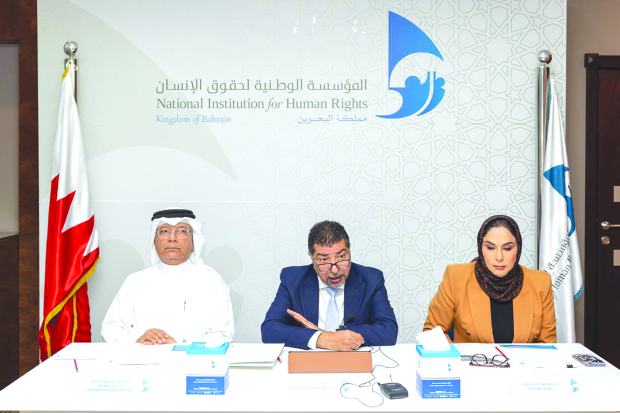
Bahrain’s human rights watchdog documented more than 300 complaints alleging various violations last year, all of which were investigated, reflecting the kingdom’s commitment to safeguarding and promoting human rights.
The National Institution for Human Rights (NIHR) released its 2025 annual report at a Press conference yesterday, highlighting its work in attending court hearings, visiting prisons, following up with relevant entities, and providing advisory opinions to legislators on various laws and proposals.
The NIHR put forth more than 60 recommendations, calling for stronger protections in healthcare, education, housing and workers’ rights. It also urged reforms to expatriate worker accommodation, rehabilitation and reintegration programmes, inmate welfare, and employment procedures.
According to the report, the watchdog received 312 complaints last year, conducted 20 field visits and attended six court hearings. The majority of complaints (83) were classified under freedom from discrimination, followed by health (55), work (41), adequate housing (40) and fair trial guarantees (31).
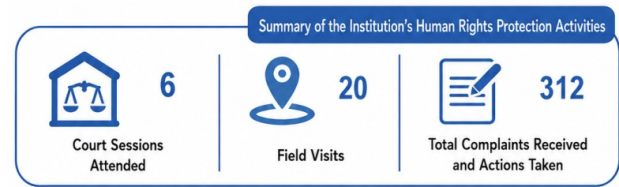
A total of 312 complaints were received, 20 field visits conducted and 6 court sessions attended by NIHR team
The rights body had documented 79 cases in its 2024 annual report, of which only 14 were formal complaints, 59 were classified under legal assistance, and six cases were monitored.
“We see a growing public confidence in the NIHR due to our efforts over the years working with several civil societies, officials and the government,” NIHR chairperson Ali Alderazi told the GDN.
“Our teams focus on different aspects such as the right of health, working with the disabled community, children and women with an overall mission to protect their human rights.
“In addition, we hold periodic meetings and conferences as part of our outreach programmes, and this growing confidence in the society is reflected in the number of complaints we receive.”
However, Mr Al Derazi highlighted the challenges they face, considering the nature of their work, which is to investigate and follow-up grievances.
“For example, being an auditor of a firm, one is not always wanted or appreciated. But we have to conduct our duties with fairness and establish good relationships by working together to navigate through any challenges,” he added.
“This annual report reflects the institution’s commitment to work independently and support national efforts to enhance human rights in Bahrain.”
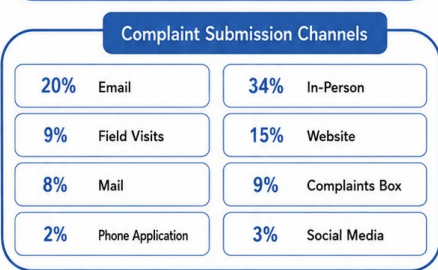
A breakdown of the different channels through which complaints were received and investigated
Co-chairing the conference yesterday was Child Rights Commissioner Dr Maha Al Shehab who outlined legislation related to child rights and protection in Bahrain, which she added were in line with international standards and best practices. She added that rights of female prisoners were also guaranteed as they are allowed to meet their children and relatives.
The number of beneficiaries of the NIHR activities last year reached 3,566, of which 2,139 were females.
Meanwhile, the report has laid down several recommendations, with a dedicated section on accommodation for expatriate workers in Bahrain.
It calls for licensing of buildings operating as workers’ hostels or shared accommodations. It also stressed the need to link the facilities to a government platform that determines their capacity, monitors the number of residents, and regulates the issuance of smart cards linked to that address. The report further urges relevant bodies to instal an identification sign at the entrance to workers’ accommodations, including a QR code.
The recommendations follow a special round-table organised by the watchdog last year that was attended by relevant government entities.

Female beneficiaries from NIHR’s activities and programmes exceeded male in all four quarters last year
The NIHR has recommended introducing stricter controls on the provision of housing cash allowances by employers, limiting them to exceptional cases based on a worker’s income level and ensuring that formal housing alternatives are made available whenever possible.
In addition, the report recommends issuing building regulations that set minimum standards for essential facilities, in line with international best practices, including sanitary facilities, bathrooms, kitchens, and laundry areas.
It further calls for a maximum building occupancy limit for every licensed labour accommodation at a rate of one occupant per 4m² of the building’s total floor area, with a maximum of six to eight people per room.
The NIHR was formed by His Majesty King Hamad in 2009 to work with state agencies to draft Bahrain’s rights reports, hold conferences and workshops and promote human rights.
Cover of the 13th annual NIHR report
The watchdog in July released a comprehensive dossier that documented Iranian aggression (February 28 to June 11) and its impact on human rights and fundamental freedoms. It called for taking legal action against Iran by dragging it to the International Court of Justice (ICJ) in The Hague. It also urged for the setting up of a National Reparation and Compensation Fund for affected persons or entities recovered through Tehran’s frozen assets.
People can file complaints at the NIHR’s Seef District headquarters, through its mobile application, its toll-free hotline 80001144 or email: complaint@nihr.org.bh.
sandy@gdnmedia.bh
Major recommendations
Some of the recommendations in the report are:
1. Examine the possibility of waiving or reducing parking fees for patients and visitors arriving at the Accident and Emergency Department of Salmaniya Medical Complex. This would improve access to urgent healthcare services and reduce the financial burden on citizens.
2. Consider introducing special arrangements for mothers who do not hold Bahraini nationality but have Bahraini children, to enable them to obtain permanent residence permits.
3. Efforts should be made to prepare and publish a standardised guide outlining the circumstances in which travel bans may be imposed, the procedures for lodging appeals or requesting the lifting of a ban, and the available channels for follow-up. The guide should be made accessible through official online platforms.
4. Examine the possibility of expanding school transport services or providing suitable alternatives for pupils who face difficulties in travelling to and from school, in order to support regular attendance.
5. Strengthen training programmes for staff in schools, educational institutions and care centres to develop their ability to recognise early signs of violence and abuse, and to improve their capacity to respond professionally and effectively to cases of physical and psychological harm.
6. Consider adopting flexible educational policies to reintegrate children who have dropped out of school due to disciplinary measures or social circumstances, and provide alternative educational pathways suited to their abilities and legal status.
7. Strengthen mechanisms for monitoring and evaluating the quality of healthcare services, particularly in critical medical cases, through the establishment of clear protocols aimed at minimising medical errors and ensuring effective accountability.
8. Explore the possibility of implementing a ‘telemedicine’ system using video conferencing technology, in co-ordination between the Interior Ministry and Government Hospitals, to provide inmates with timely access to specialist consultations, facilitate early diagnosis and reduce waiting times.
9. Expand the range of specialist healthcare services available to inmates, including dental prosthetics, free of charge, while taking into account their health and social needs.
10. Strengthen vocational reintegration and training programmes for those released following a royal pardon, substitution of sentence or expiry of custodial sentences to ensure their smooth return to the labour market.
11. Review and enhance procedures for reactivation of suspended housing applications and the resumption of housing allowances for beneficiaries released under a Royal Pardon.
12. Strengthen awareness programmes within correctional and rehabilitation centres regarding inmates’ rights and the mechanisms for lodging complaints and appeals, thereby ensuring that they are empowered to report any practices that compromise their physical or psychological wellbeing.
13. Develop the notification system for interview attendance or rejection by requiring the relevant authorities to use all three documented communication channels (recorded call, text message and email) before finalising a rejection decision. Employers should also be required to provide clear reasons for rejection.
14. Expand awareness programmes for migrant workers on their legal rights and redressal mechanisms, particularly with regard to freedom of movement and protection from any practices that may involve coercion or unlawful restriction of liberty.
15. Examine the possibility of granting humanitarian exemptions for female detainees with children, including children over the age of 12, by allowing direct family visits without a glass partition whenever security and regulatory requirements permit, while ensuring that the best interests of the child remain a primary consideration.
&uuid=(email))