

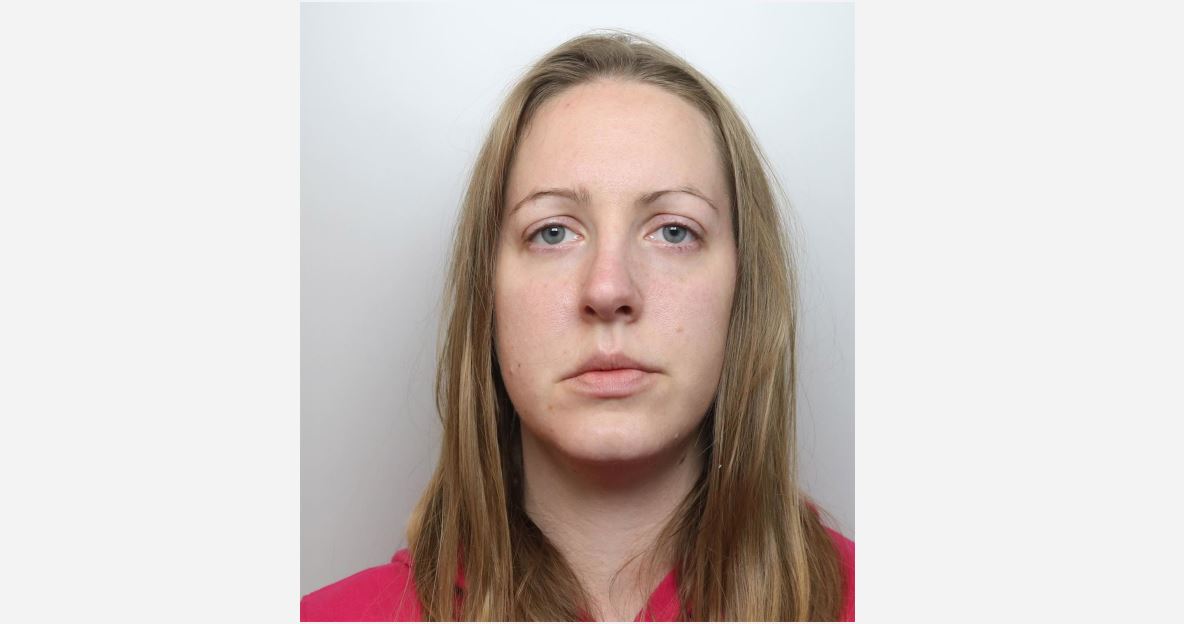
British nurse Lucy Letby was able to murder seven babies because of a ‘complete failure’ to protect infants at the hospital at which she worked, and some of the deaths could have been prevented, the chair of an inquiry said yesterday.
Inquiry chair Kathryn Thirlwall criticised senior staff for not acting sooner, blaming dysfunctional management at the Countess of Chester Hospital, in northern England, and a basic lack of understanding of safeguarding.
The Countess of Chester Hospital NHS Foundation Trust apologised and said it was now a different organisation with new leadership, while health minister Yvette Cooper said she was “profoundly sorry” on behalf of the British government and health service.
Letby, 36, was convicted in 2023 of murdering seven newborns and attempting to murder six others, making her Britain’s most prolific serial child killer of modern times. She was later convicted of another attempted murder charge.
Prosecutors said Letby attacked the newborns by giving them an overdose of insulin, injecting them with air or force-feeding them milk between June 2015 and June 2016, in a case that shocked Britain and drew worldwide attention.
But Letby, who was sentenced to life without parole and maintains she is innocent, has also been the subject of a growing campaign, backed by some medical experts and specialists, which has publicly questioned her convictions.
Thirlwall did not address Letby’s guilt or innocence in her report and emphasised the impact on those whose children were harmed, saying: “The families must not be collateral damage in the public argument about whether or not Letby is guilty.”
The contents of her report, though, will be pored over by those who assert Letby’s innocence, around two dozen of whom gathered outside Liverpool Town Hall yesterday.
It will also be examined by the Criminal Cases Review Commission, an independent body that reviews potential miscarriages of justice and is considering an application from Letby’s legal team.
“This inquiry has proceeded on the wrong premise and it follows that this has inevitably affected the report as a whole,” Letby’s lawyer, Mark McDonald, said in a statement.
“Once there was suspicion that Letby may be causing harm deliberately, safeguarding steps should have been taken,” Thirlwall said as she delivered her final report.
&uuid=(email))