

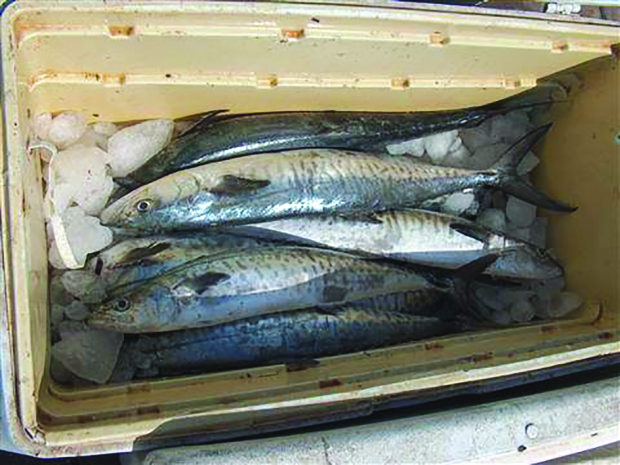
The annual two-month ban on kingfish fishing will end on Friday, the Supreme Council for Environment (SCE) announced yesterday.
This means fishermen will once again be able to sell kingfish, popularly known as channad, in markets and public places following the ban, which began on August 15.
The council emphasised that the ban during the breeding season aimed to increase fish stocks by regulating fishing activities and preventing their depletion, thereby maintaining ecological balance within the marine environment.
It commended the co-operation and sense of national responsibility demonstrated by fishermen throughout the ban period.
It also called on everyone to comply with the applicable regulatory decisions and work together to strengthen efforts to conserve and ensure the sustainability of the kingdom’s fish stocks.
Bahrain has seasonal bans on catching certain species, including safi, sheri and andaq in April and May.
There is also an annual six-month ban on shrimping, which this year ran from February 1 to July 31.
A ban on fishing, selling, or trading 18 species of juvenile fish, crustaceans and marine life is also strictly enforced by the authorities.
The GDN reported in January that last year, fish supplies in the kingdom’s markets totalled 6,849.6 tonnes, with the highest monthly figure recorded in November at 1,055.1 tonnes.
The data was released as part of a detailed ministerial response to a parliamentary question by Mohammed Al Rifai about the regulation of the marine fishing sector.
Oil and Environment Minister and Special Envoy for Climate Affairs Dr Mohammed Bin Daina stressed that regulatory measures were not arbitrary, but grounded in scientific, technical and economic studies aimed at safeguarding Bahrain’s marine future. The measures aim to give key species, including rabbitfish, emperor fish and kingfish, time to mature and reproduce, while protecting reef areas that serve as natural nurseries, Dr Bin Daina added.
&uuid=(email))