

I OFTEN find myself asking a question that many HR professionals quietly carry but rarely voice openly. Why do so many CEOs still struggle to see HR as a truly strategic function? It is an uncomfortable question because the answer is not simple. If we are honest, responsibility sits on both sides of the table.
Today we know something very clearly. Organisations do not succeed simply because they have good strategy documents, technology investments or operational systems. They succeed because of people. Talent quality, leadership capability, organisational culture, motivation and collaboration are the forces that determine whether strategy lives or dies inside an organisation.
Every transformation effort eventually becomes a people challenge. Yet despite this reality, HR often finds itself in an unusual position. The function responsible for the people agenda, arguably one of the most complex dimensions of any organisation, still struggles in many companies to be recognised as a “core” strategic partner.
Part of the explanation lies within the history of HR itself. For decades the function evolved around administrative responsibilities such as payroll, recruitment processing, policies, compliance and employee relations. These responsibilities are essential and organisations cannot function without them. However, they do not naturally place HR in conversations about growth strategy, market competitiveness or business expansion. As a result many HR teams became excellent administrators but were not always positioned or trained to operate as strategic business thinkers.
CEOs and executive teams understandably listen most closely to those who speak the language of the business, the language of revenue growth, cost management, operational efficiency and shareholder value.
If HR wants a stronger voice at the leadership table, it must learn to translate people strategy into business outcomes. This means understanding the organisation not only as a workplace but as a commercial system. How does leadership capability influence productivity and profitability. How does culture affect innovation, customer experience and speed of decision making.
How does talent development shape long term competitiveness. When HR professionals frame their work in these terms, the conversation begins to change. HR is no longer speaking about training programmes and engagement surveys alone. It is speaking about organisational performance.
At the same time, HR operates within one of the most complex tensions in any organisation. On one side sits the pressure of financial performance, shareholder expectations and quarterly targets. On the other side sits the human reality of work, the well-being of employees, trust within teams, fairness in decisions and the sustainability of performance over time.
These priorities do not always move in perfect alignment. Executive teams carry immense pressure to deliver results. Markets move quickly, competition is intense and financial expectations are constant. In that environment, it becomes easy for the people agenda to slowly slip into the background.
This is precisely where HR becomes most important. A strong HR function does not simply administer policies or facilitate processes. It also acts as a steady voice that reminds leadership teams that sustainable performance cannot be built on pressure alone. People can achieve extraordinary results when they feel trusted, valued and supported. When organisations ignore the human dimension for too long, the consequences eventually surface in burnout, disengagement, high turnover and declining innovation.
In many ways HR plays a dual role inside organisations. It must partner with executives to achieve business goals while also ensuring that the organisation does not lose sight of the human foundation that makes those goals possible. It has to speak the language of performance while protecting the conditions that allow performance to exist in the first place. That balance is not easy to maintain.
For HR to fully step into this role two shifts need to happen simultaneously. HR professionals themselves must develop deeper business literacy. They must understand financial drivers, strategic positioning, industry trends and operational realities. The most influential HR leaders I have seen are those who can walk into a boardroom and connect people capability directly to business strategy.
At the same time CEOs must recognise that the people agenda is not a support function that can simply be delegated to a department. Culture, leadership development, succession planning and employee engagement are leadership responsibilities that require active attention from the entire executive team.
The organisations that will thrive in the coming years will not necessarily be those with the most sophisticated strategies on paper. They will be those that recognise a simple truth. Strategy is written on paper but performance is delivered by people. The real question for CEOs therefore is not whether HR deserves a seat at the strategy table. The real question is whether any strategy can truly succeed without it.
Join us next month for another edition of Workplace Watch where we will continue exploring the ideas shaping the future of work. Until then keep growing, keep learning and keep pushing the boundaries of what is possible.
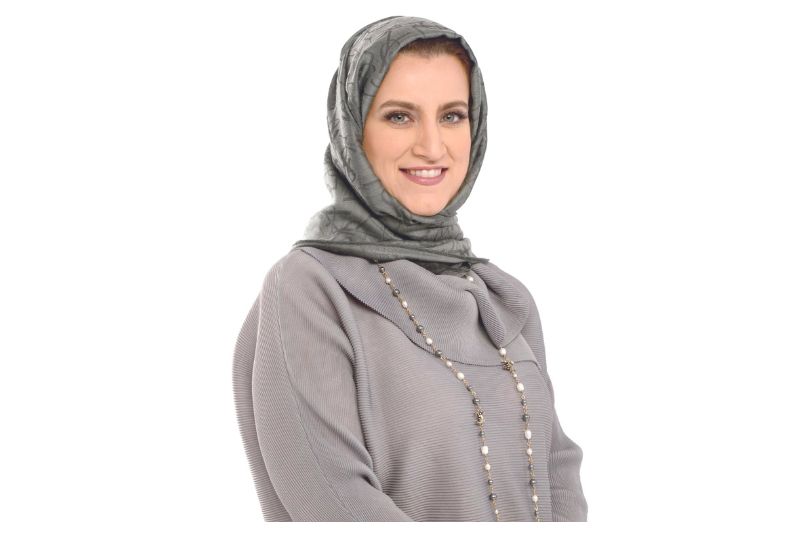
Amal Kooheji is a growth advocate
&uuid=(email))