

The world today is crowded with geopolitical disputes and open-ended historical claims. Almost anyone can raise grand slogans and demand land or rights in the name of history, regardless of whether such claims can survive the test of reality.
We hear, from time to time, talk in the United States about Greenland. We continue to see the long-standing tensions between Greece and Türkiye over territory and historical grievance. We also see Israel advancing expansionist narratives under the banner of what it calls ‘Greater Israel’.
Yet all these parties know that such claims are largely political fantasies, impossible to impose in a modern world shaped by international law, established borders, the balance of power and the strength of national identities.
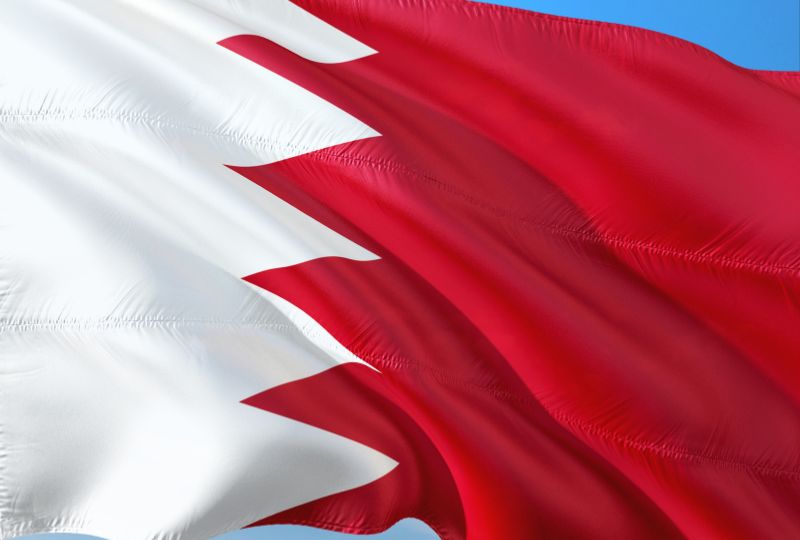
Against this background of inflated claims and contested histories, Bahrain stands as a country whose identity is not open to bargaining. Bahrain is Arab in history, geography, culture and belonging. This is not a slogan, but a settled fact. Even when Bahrain passed through periods of foreign occupation or external influence, those forces were occupying Arab land and attempting to control an Arab people deeply attached to their homeland.
Occupation did not alter the character of the land, nor did it weaken the Arab identity of its people. Across the centuries, Bahrain has remained firmly rooted in its Gulf and Arab surroundings.
Bahrain’s history also tells another important story. The kingdom has long been a civilised, open and commercially active society, connected to the wider world through trade, culture and human exchange. This openness made Bahrain home to individuals and families with ancestral roots extending to different parts of the region and beyond. Such diversity has enriched Bahraini society when embraced within the framework of loyal citizenship and shared national belonging.
But when the question concerns the state, its sovereignty, and its national identity, there can be no ambiguity. Whoever lives on Bahraini soil must accept Bahrain as a sovereign Arab state, with loyalty directed first and foremost to Bahrain, its leadership, and its national interests. A homeland is not a hotel one leaves when the service is not to one’s liking. Nor is it a stage for divided political loyalties. It is a bond of duty, identity and responsibility.
Nations are not built on fractured allegiance. No country can rise while some enjoy its stability and prosperity while looking politically, emotionally, or ideologically toward other capitals. Citizenship is not merely residence, benefit or convenience. It is a clear moral and national commitment.
In this proud national context, popular and patriotic initiatives play an important role in reaffirming these principles. The signing of ‘documents of loyalty’ should not be seen as a passing public relations exercise or a ceremonial gesture designed for media attention. It is a conscious national act, a sincere renewal of allegiance, and a clear expression of attachment to Bahrain’s soil, Arab identity, and unity under the leadership of His Majesty King Hamad, the guardian of this national journey.
I believe that nations are not protected by vague positions or by standing in grey areas. They are protected by firm convictions, especially at decisive moments when the true measure of loyalty becomes visible. Loyalty is not a cloak worn at official occasions. It is a belief proven through conduct before words.
Those who question Bahrain’s Arab identity should not be a source of fear. Bahrain’s history has shown its ability to overcome difficult turning points while remaining resistant to absorption, distortion, or ideological dilution. What deserves attention is not the noise of isolated voices, but any attempt to weaken national unity, stir division, or draw artificial lines between the people of one country.
Bahrain’s strength has always rested in the unity of its people, their belief that their land is Arab, and their loyalty to their country and leadership. Any slogan raised outside this national framework is no more than an illusion. It has no place in Bahrain’s reality, and no future on its soil.
akram@fp7.com
&uuid=(email))