

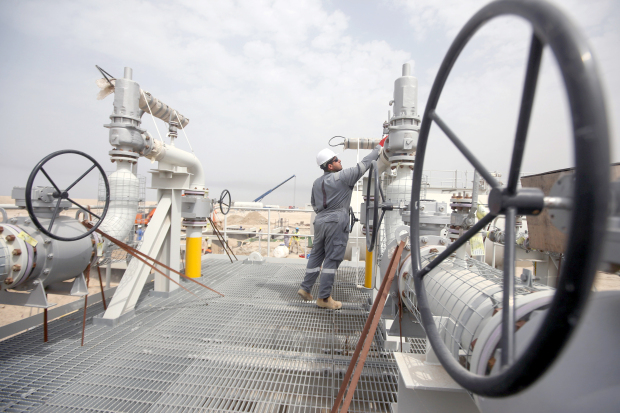
Iraq increased oil exports through the Strait of Hormuz and the Ceyhan pipeline in July, Oil Minister Bassem Mohammed Khudair said, as Baghdad sought to recover revenue lost during the disruption of its main export route, reports the Arab News.
Average shipments through the two outlets reached about 1.5 million barrels a day before the latest escalation in the war, Khudair said in an interview with Asharq Bloomberg in Washington broadcast yesterday.
While that remains well below Iraq’s pre-war exports, it stands at about three times Bloomberg estimates for June shipments.
Iraq is seeking a significant increase in exports to offset heavy financial losses caused by the closure of Hormuz, the main route for Baghdad’s oil sales.
Khudair did not provide details on the impact of renewed attacks between the US and Iran this week on export volumes, only saying that the conflict was affecting countries beyond Iraq.
Iraq’s economy is one of the region’s most exposed to the crisis, with gross domestic product potentially shrinking 15 per cent this year, according to Standard Chartered estimates. Income from oil sales accounts for roughly 90pc of government revenue.
Meanwhile, Bloomberg reports that Iraq is using a vast fleet of trucks to carry fuel oil through Syria and reroute flows away from the Strait of Hormuz, rapidly transforming its neighbour into the Middle East’s top export hub.
In just months, Syria has gone from shipping none of the fuel to making up more than a quarter of Middle Eastern volumes. The supplies are arriving on thousands of trucks that can take about four days to reach Syria’s Mediterranean ports, and highlight how the Iran war is reshaping the region’s energy flows.
A fresh flare up in hostilities in the region is affecting the movement of fuel cargoes, further underlining the importance of alternative routes. The strait normally accounts for about a fifth of the world’s oil supply.
The sharp increase also underscores efforts to bring Syria into the global economy, after the US lifted years of sanctions and supported the country’s turnaround. The nation is increasingly seen as a gateway for energy flows from Iraq, including plans for crude oil pipelines, so as to weaken Iran’s leverage over the crucial waterway.
&uuid=(email))