

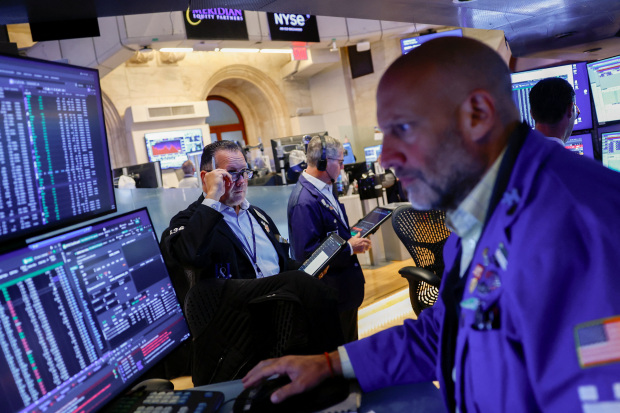
Global stocks were slightly lower yesterday after the previous session’s selloff, while US Treasury yields hit their highest level since 2007 amid concerns that oil prices firmly above $100 could deepen the energy shock.
US yields have climbed over the past month as investors grapple with rising rate expectations, heavy debt issuance, solid economic growth and worries about the country’s long-term fiscal outlook.
Markets were shifting their focus to the Federal Reserve, with traders wagering on a quarter-point rate hike and indications that further policy tightening lies ahead, although Fed Chair Kevin Warsh is reticent about guidance about the rate path.
MSCI’s main world stocks index fell 0.18 per cent yesterday, after dropping 0.65pc the day before.
Europe’s STOXX 600 was down 0.10pc, after hitting 629.41, its lowest level since June 12. The European tech stock index rose 0.10pc, after shedding more than 2pc on Monday.
Nasdaq futures were down 0.10pc and S&P 500 futures fell 0.15pc.
Oil prices were up, with benchmark Brent crude futures above $105 per barrel as Yemen’s Iran-aligned Houthis launched a new wave of attacks on Saudi Arabia and were digging into positions on the western coast of Yemen along the Red Sea.
“Several weeks ago, there may not have been a strong reason to believe that crude would rally further, but there is now: Iran’s strategic military doctrine has shifted toward pre-emptive attack,” Thierry Wizman, global forex and rates strategist at Macquarie Group, said.
“And the US administration may have no choice but to move back to kinetic war after the mid-term elections,” he added.
US 10-year Treasury yields hit peaks not seen since 2007 yesterday as traders priced in a series of rate increases from the Federal Reserve.
German Bund yields, the euro area’s benchmark, rose to their highest level in over 17 years at 3.56pc, as traders boosted bets on European Central Bank rate hikes, with a depo rate seen at 3.45pc at the end of 2027, from the current 2.50pc.
“The market sees a total of nearly four rate hikes (from the Fed) through the end of next year,” John Velis, head of Americas strategy at BNY, said.
“We think that by then the economy won’t be able to handle rates that high for very long, and the Fed will be contemplating dialing back its restrictiveness toward the second half of the year,” he added.
A hawkish repricing of the Fed’s rate path supported the dollar, but some strategists said higher yields were also stoking concerns about a deeper correction in risk assets, prompting investors to seek refuge in the US currency.
The dollar index, which measures the greenback against a basket of currencies, rose 0.12pc to 99.58, after being up 0.39pc the day before. The European single currency was down 0.05pc on the day at $1.1542, while the dollar rose 0.40pc against the yen to 154.79.
The Bank of Japan is widely expected to raise its interest rate by 25 basis points to 1.25pc at the end of its two-day meeting on Friday and signal more tightening ahead. Policymakers are seeking to shore up the yen after intervention helped steer the currency away from a 40-year low.
Gold was slightly higher. Spot gold traded at $4,283 per ounce.
&uuid=(email))