

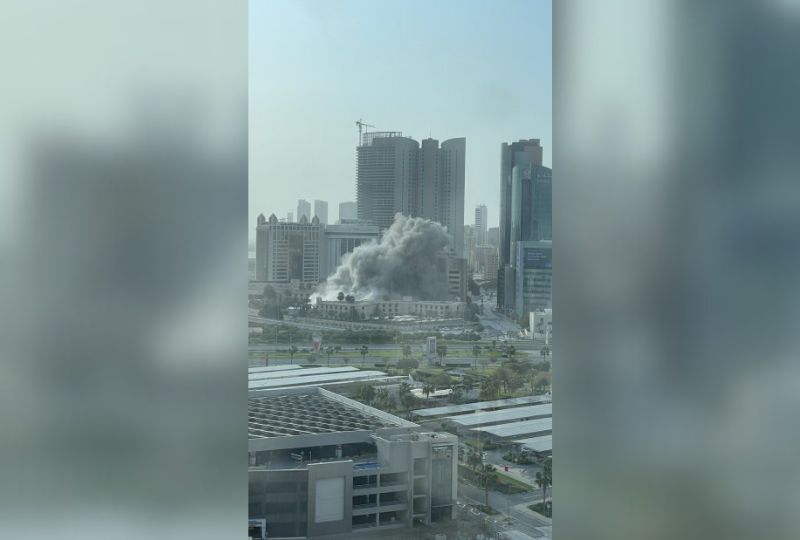
The GCC Ministerial Council has expressed its rejection and condemnation in the strongest terms of heinous Iranian attacks targeting Gulf countries and Jordan.
This came as the council held its 50th extraordinary meeting via videoconference yesterday to discuss the Iranian attacks using missiles and drones against the UAE, Bahrain, Saudi Arabia, Oman, Qatar and Kuwait, which began on Saturday. Dr Abdullatif Al Zayani, Foreign Minister and current President of the council, chaired the meeting.
The council expressed full solidarity among the GCC countries and their unified stance in confronting these attacks, stressing that the security of GCC member states is indivisible, and that any attack against any member state constitutes a direct attack against all GCC countries.
It affirmed that GCC countries reserve their legal right to respond, in accordance with Article 51 of the United Nations Charter, which guarantees the right of self-defence, individually and collectively, in the event of aggression, and to take all necessary measures to safeguard their sovereignty, security and stability.
The council commended the efficiency and readiness of the armed forces and air defence systems of member states, which successfully intercepted missile and drone attacks with a high level of professionalism, contributing to neutralising the threat, mitigating its impact, and protecting lives, facilities and vital assets.
The Ministerial Council affirmed that, in light of this unjustified Iranian aggression against GCC countries, they will take all necessary measures to defend their security and stability and to protect their territories, citizens, and residents, including the option of responding to the aggression.
“Despite the numerous diplomatic efforts undertaken by the GCC countries to avoid escalation, and despite their affirmation that their territories would not be used to launch any attacks against Iran, the latter has continued to carry out military operations targeting GCC countries, affecting numerous civilian and residential facilities,” it said.
The council underscored the necessity of an immediate cessation of these attacks to restore security, peace and stability in the region.
It underscored the vital importance of maintaining aerial and maritime security, protecting regional waterways, ensuring the integrity of supply chains, and guaranteeing the stability of global energy markets.
“The stability of the Arabian Gulf region is not merely a regional concern but a fundamental pillar of global economic stability and maritime navigation.”
The Ministerial Council called upon the international community to strongly condemn and denounce these aggressions.
It further urged the United Nations Security Council to fulfil its responsibilities by taking an immediate and firm stance to prevent these violations, which endanger civilian lives, and to ensure they are not repeated, given their grave repercussions for regional and international peace.
The council noted that the GCC states have always advocated for dialogue, negotiations and the resolution of all issues with Iran, praising the role of Oman in this regard.
It reaffirmed the importance of dialogue and diplomacy in international relations as the sole path to overcome the current crisis and preserve regional security and the safety of its peoples.
It warned that any escalation would undermine regional security and drag the region towards dangerous trajectories with catastrophic consequences for international peace and security.
&uuid=(email))