

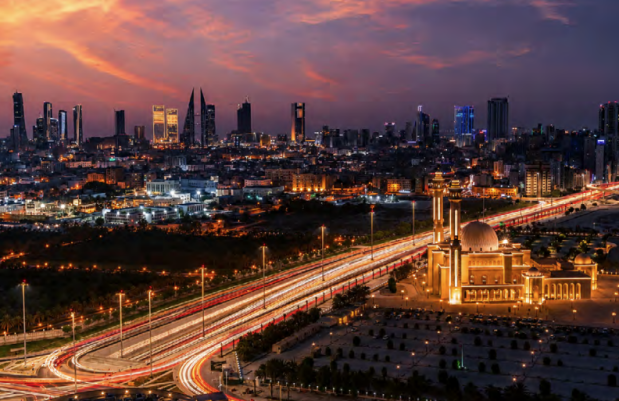
Bahrain has made significant progress in implementing the 2030 Agenda of the Sustainable Development Goals (SDGs), despite being tested by ‘unprovoked and indiscriminate’ missile and drone attacks by Iran, according to a government report.
While facing challenges that included loss of life and damage to civilian and critical infrastructure, the kingdom has stood firm in its commitment to peace and dialogue.
The third Voluntary National Review (VNR) 2026 report, compiled by the Sustainable Development Ministry, outlines progress made in different areas and the measures and policies adopted by Bahrain to meet the 2030 SDG agenda.
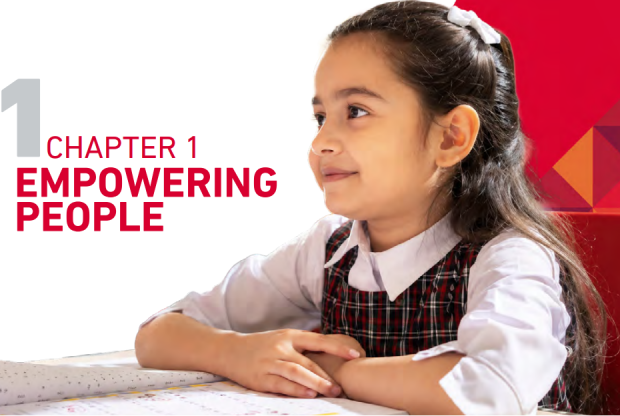
Bahrain is fully committed to providing high-quality education, building on a strong foundation characterised by high enrollment and completion rates
The SDGs comprise a set of 17 goals with 169 targets and 248 indicators, covering areas such as eradicating poverty, hunger and gender discrimination, while ensuring affordable and clean energy, climate action and quality education. All UN member-states agreed in 2015 to work towards achieving the goals by 2030.
The latest Bahrain report is structured across four chapters: Empowering People, Celebrating Heritage, Securing the Future, and Economic Sustainability. The report states that with four years remaining until 2030, Bahrain is charting a long-term vision of sustainable growth and prosperity through its upcoming Vision 2050.
“This progress, however, has been tested,” states the main message in the report. “The unprovoked and indiscriminate missile and drone attacks launched against the kingdom by the Islamic Republic of Iran – in flagrant violation of international law and the United Nations Charter – have resulted in loss of life, injuries, and significant damage to civilian and critical infrastructure.”
Sustainable Development Minister and Economic Development Board chief executive Noor Al Khulaif said Bahrain is maintaining its steadfast commitment to advancing sustainability efforts across the social, economic and environmental dimensions; even at one of the most challenging times for our nation.

Ms Al Khulaif
“In the face of unprovoked external aggression, Bahrain’s response provided a definitive demonstration of solidarity and the principle of leaving no one behind,” said Ms Alkhulaif in the report’s opening statement.
“Under wise leadership, the government’s decisive actions with the immediate activation of a comprehensive emergency response protocols, underscored a clear national mandate: protecting the lives and well-being of the entire community above all else.”
The minister added that since the last VNR in 2023, Bahrain followed a systematic approach to taking stock of the achievements and challenges across all the SDGs.
She said the VNR 2026 report aligns with the Kingdom’s priorities and localises the SDGs, from empowering the people through education, training, social support, healthcare systems, to balancing the past with the preservation of culture, heritage and identity while looking to future proof the country through climate protection and enabling innovation and digitisation.
“As we progress with developing the Bahrain Economic Vision 2050, the Kingdom is firmly committed to defining a long-term roadmap for sustainability; one that champions people, prosperity and planet,” said the minister.
Bahrain is among 36 countries to submit VNR reports this year that will be presented at the high-level political forum on sustainable development to be held at the UN headquarters in New York from July 7-15. This year’s forum will be convened under the theme: ‘Transformative, equitable, innovative and co-ordinated actions for the 2030 Agenda and its Sustainable Development Goals for a sustainable future for all.’
The report’s first chapter on Empowering People covers different health programmes and policies in Bahrain while aiming to build a highly skilled workforce to drive economic growth. It states that Sehati (National Health Insurance) programme – expected to be fully implemented by the end of this year – will guarantee patients’ right to choose the service provider, and create greater opportunities for competition between the public and private sectors. It also documents Bahrain’s prevention approach, particularly for diabetes and cardiovascular disease, which includes promoting healthier diets.
“Since 2017, authorities have worked with industry to reduce salt, sugar, and fat in food products, supported by public awareness campaigns, stronger school nutrition standards, clearer food labelling, and targeted taxes on unhealthy products,” states the report.
In 2024, the Health Ministry strengthened these efforts with the launch of Food-Based Dietary Guidelines, promoting reduced intake of foods high in sugar, salt, and unhealthy fats while encouraging healthier food choices and raising preventive health awareness across the population.”
The assessment also covers the Bahrain National Genome Programme to establish a comprehensive genetic map of the Bahraini population. As of June 2026, the programme has collected 75,855 samples, placing it on a strong trajectory towards its target of 100,000 by 2028.
The report warns that demographic and social shifts, from ageing populations to the growing prevalence of chronic diseases and health emergencies, if not monitored and addressed, can put increasing pressure on health systems and social protection services.
Labour and Employment
1. Between 2023 and 2025, Tamkeen supported 32,400 Bahrainis in getting jobs—of which 52pc were females and 92pc aged between 18 and 35—and facilitated 14,400 training opportunities for job seekers. Since its inception, Tamkeen has contributed more than BD2.6 billion to the economy through direct and indirect financing, creating more than 300,000 opportunities for Bahrainis.
2. By December 2025, 18,657 job seekers were provided with three job opportunities each, enabling the employment of 4,746 Bahrainis.
3. The Labour Market Regulatory Authority (LMRA) launched the Wage Protection System in 2021 to ensure that all employees have properly documented work contracts and that they are paid their wages in full and on time. By 2026, these measures have resulted in an exceptional registration rate of 85pc in the portal across targeted sectors, encompassing more than 570,000 workers, drastically reducing wage-related disputes.
4. In 2024, the IBAN Initiative, a collaboration between the LMRA, the Central Bank of Bahrain and the private sector, advanced financial inclusion by issuing an International Bank Account Number (IBAN) to every expatriate worker upon arrival in Bahrain. This proactive measure integrates the workforce into the formal banking system from day one, ensuring secure and transparent wage deposits.
By 2026, more than 470,000 IBANs were generated for workers during the issuance and renewal of work permits for commercial and domestic workers.
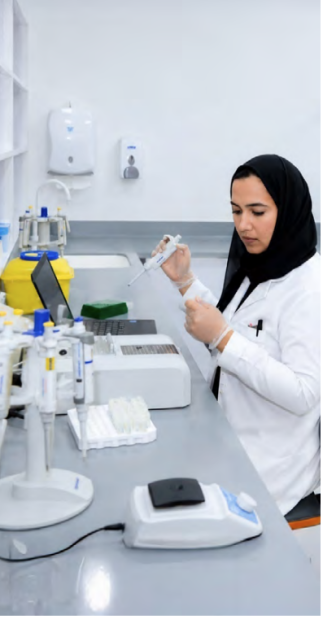
Women represented 55.9pc of students enrolled in higher education institutions during the 2024-2025 academic year
Women
1. Women accounted for over 40pc of STEM enrollments in higher education in 2022 and up to 50pc of graduates in those fields. Women represented 55.9pc of students enrolled in higher education institutions during the 2024-2025 academic year.
2. Today, Bahraini women occupy 22pc of cabinet seats, 25pc of Shura Council seats, and 20pc of Parliament seats. As of April 2026, Bahraini women represented 13pc of board members at companies, 51pc of senior executive positions in government, alongside growing representation in the judiciary and entrepreneurship ecosystem.
This momentum has been accompanied by strong participation in the labour market, with women’s labour force participation reaching around 43pc in 2025, significantly exceeding the Arab regional average and approaching global levels.
3. By January 2026, women owned 34.4pc of Bahrain’s 85,700 registered Small and Medium Sized Enterprises (SMEs), while the number of real estate transactions involving women increased by approximately 36pc between 2021 and 2025, reflecting their growing role in property ownership and investment activities.
4. Cumulatively, Tamkeen’s women’s empowerment efforts since its inception has supported more than 15,800 women-led enterprises, trained more than 92,600 women, provided more than 32,500 jobs to women, and supported more than 7,100 female entrepreneurs to launch their businesses.
5. In April this year, coinciding with its 25th anniversary under the theme ‘25 Years... A Humanitarian Legacy’ and the unprovoked attacks launched against the kingdom, the Royal Humanitarian Foundation launched a media and community initiative titled ‘Rest Assured... Bahrain is Well as Long as You Are Its People’, aimed at strengthening social cohesion across all segments of Bahraini society. The initiative introduced dedicated online platforms to assess family needs and ensure faster response and service delivery, through which more than 2,000 sponsored families have already been reached.
Housing
1. The general budget for 2025–2026 allocated the largest financing package for social housing projects in Bahrain’s history, totaling BD800 million. This investment supports the provision of thousands of services across housing projects and financing programmes. To support this target, the Housing and Urban Planning Ministry has advanced several large-scale urban development projects, creating five new cities and residential communities: Madinat Salman, Madinat Khalifa, Hidd Housing City, Sitra Housing City, and Al Ramli Housing District.
2. The ministry has also strengthened collaboration with the private sector through a public-private partnership model to expand and accelerate the delivery of affordable social housing options. Since its introduction in 2013, housing projects implemented through this framework have injected approximately BD1.9 billion into the national economy.
Judicial reform
Two pioneering initiatives on this front are the Alternative Sentencing Programme and the Open Prisons Programme, which are integral components of Bahrain’s National Human Rights Action Plan 2022-2026. The Alternative Sentencing Programme has benefitted 8,278 people, supporting their rehabilitation and reintegration. The kingdom is already seeing the results of these programmes, with reoffending rates at around 2.5pc, some of the lowest in the world, according to the report.
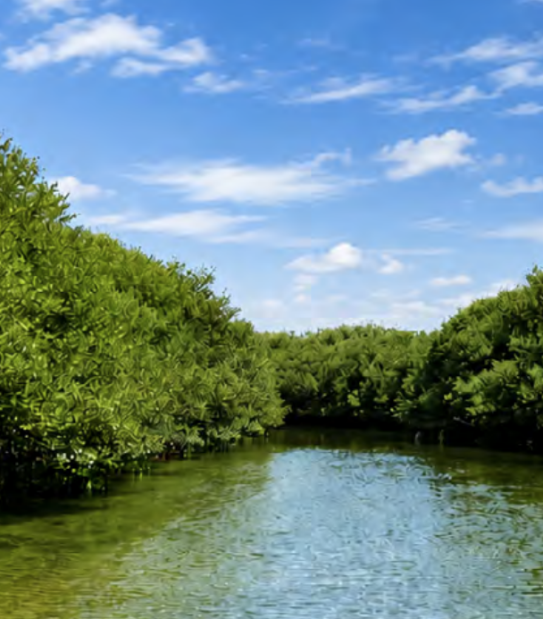
Bahrain earlier this year surpassed its mangrove planting milestone ahead of the 2035 deadline
Environmental Practices for a Sustainable Future
Bahrain continues to advance a comprehensive transition towards carbon neutrality by 2060. This commitment is accompanied by a set of ambitious interim targets for 2035, including reducing emissions by 30pc.
1. The National Adaptation Investment Plan guides investments in water security, ecosystem protection, and coastal resilience. By 2035, the kingdom aims to achieve full water resilience, quadruple mangrove coverage, and double tree cover. By 2040, all 161 kilometers of Bahrain’s coastline will be protected.
2. Bahrain is also strengthening public access to environmental information through the development of the Bahraini Air Quality Index smartphone application by the Supreme Council for Environment, expected to be launched this year. The application will provide real-time air quality data, health guidance, and daily recommendations.
3. The Coastal Resilience Strategy has developed a digital model of Bahrain’s terrain and assessed multiple sea-level rise scenarios through to 2100. Based on these assessments, an action plan comprising more than 190 proposed measures was developed to protect Bahrain’s coastline, with implementation planned in five-year phases through to 2040.
4. The National Afforestation Plan aims to plant 3.6 million trees by 2035 as part of Bahrain’s broader climate resilience and environmental sustainability agenda. By the end of 2025, approximately 62pc of this target had been achieved.
5. By May this year, Bahrain had surpassed its mangrove planting milestone ahead of the 2035 deadline, reaching 2.23m planted seedlings and achieving 139pc of the target, marking a significant milestone in the kingdom’s efforts to strengthen biodiversity and climate resilience.
6. This year Bahrain expanded support for farmers by allocating them plots in Buri and Hoorat A’ali, with more than 122,000 square metres of agricultural land made available through the Government Land Investment Platform, under long-term land-use agreements.
Manufacturing, logistics and Start -Ups
1. The iFactories initiative, launched by the Industry and Commerce Ministry, aims to transform 300 existing manufacturing facilities into smart factories by 2026, helping manufacturers improve productivity.
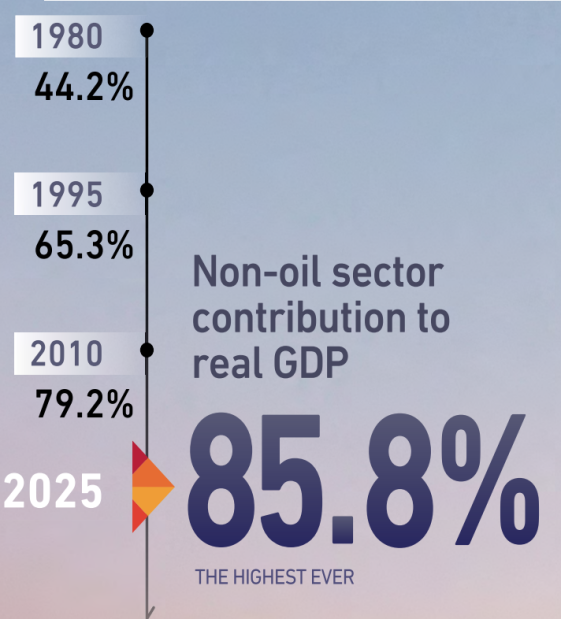
2. SMEs are a major driver of Bahrain’s economic growth and diversification, accounting for 93.4pc of all enterprises. There are more than 85,700 operating SMEs. In 2025, SMEs contributed BD5.96 billion – 32.4pc of the GDP.
3. There is a focus on expanding capacity, improving efficiency, strengthening connectivity, and making Bahrain a more competitive base for trade, freight, distribution, and re-export activity. Its objectives include reaching 1 million metric tonnes in air freight capacity and 1 million containers in cargo port capacity by 2030.
4. StartUp Bahrain, a national platform for innovative, scalable start-ups that is powered by Tamkeen, has supported more than 223 startups, facilitated more than $50 million in investments, and engaged entrepreneurs and ecosystem stakeholders through more than 342 events, helping strengthen Bahrain’s position as a regional hub for innovation and entrepreneurship.
Cover of the Bahrain VNR 2026
The VNR report concludes that as global challenges become increasingly interconnected, national progress must be complemented by international co-operation.
“Looking ahead, to the final four years, Bahrain remains focused on closing implementation gaps, accelerating delivery, and ensuring that no one is left behind,” the report said. “The kingdom recognises that the path ahead will continue to present challenges, from economic uncertainty, climate pressures and regional and global security concerns to rapid technological transformation.”
sandy@gdnmedia.bh
&uuid=(email))